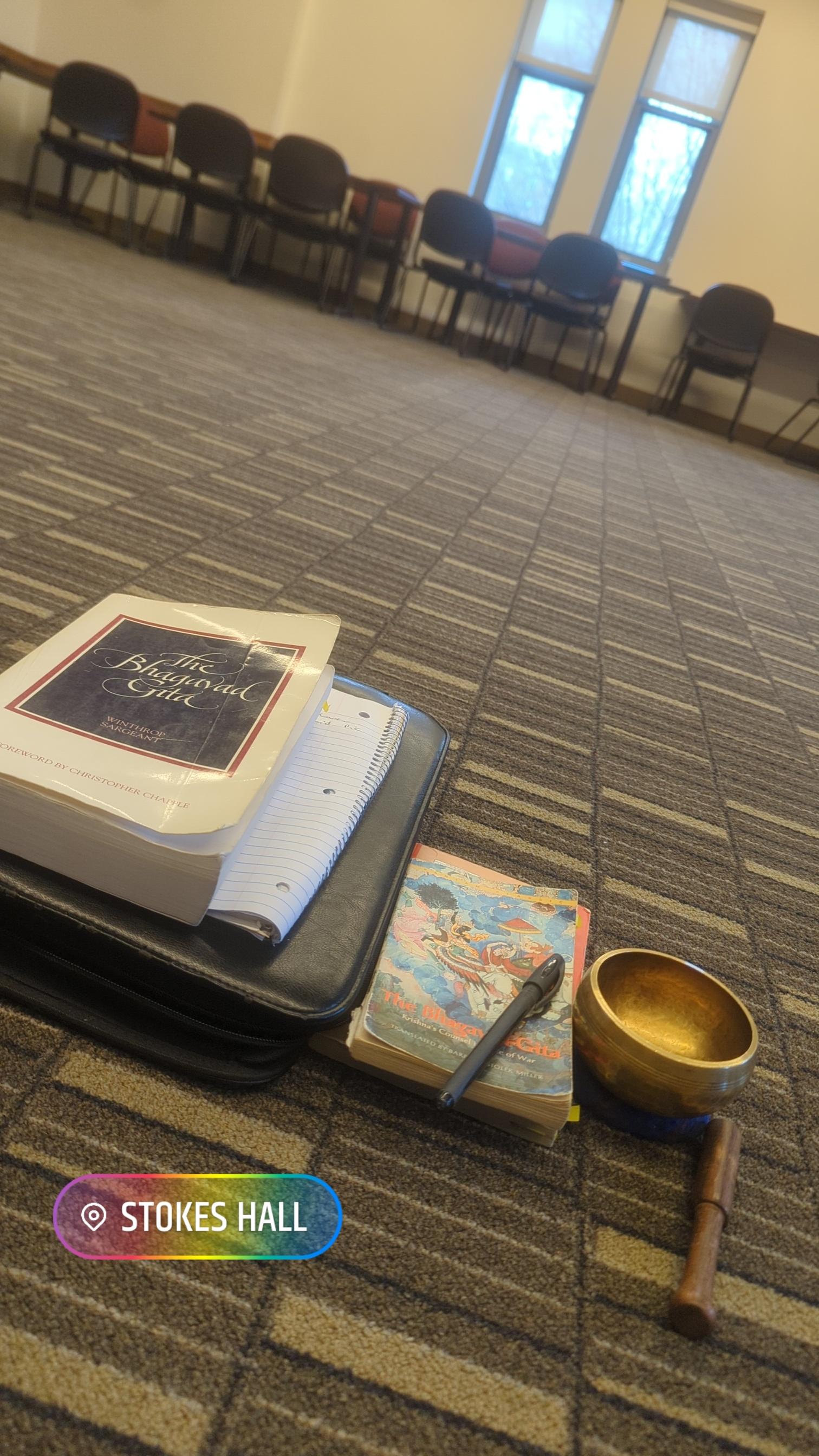
THEO 1432: The Religious Quest
Course Hub & Study Guide

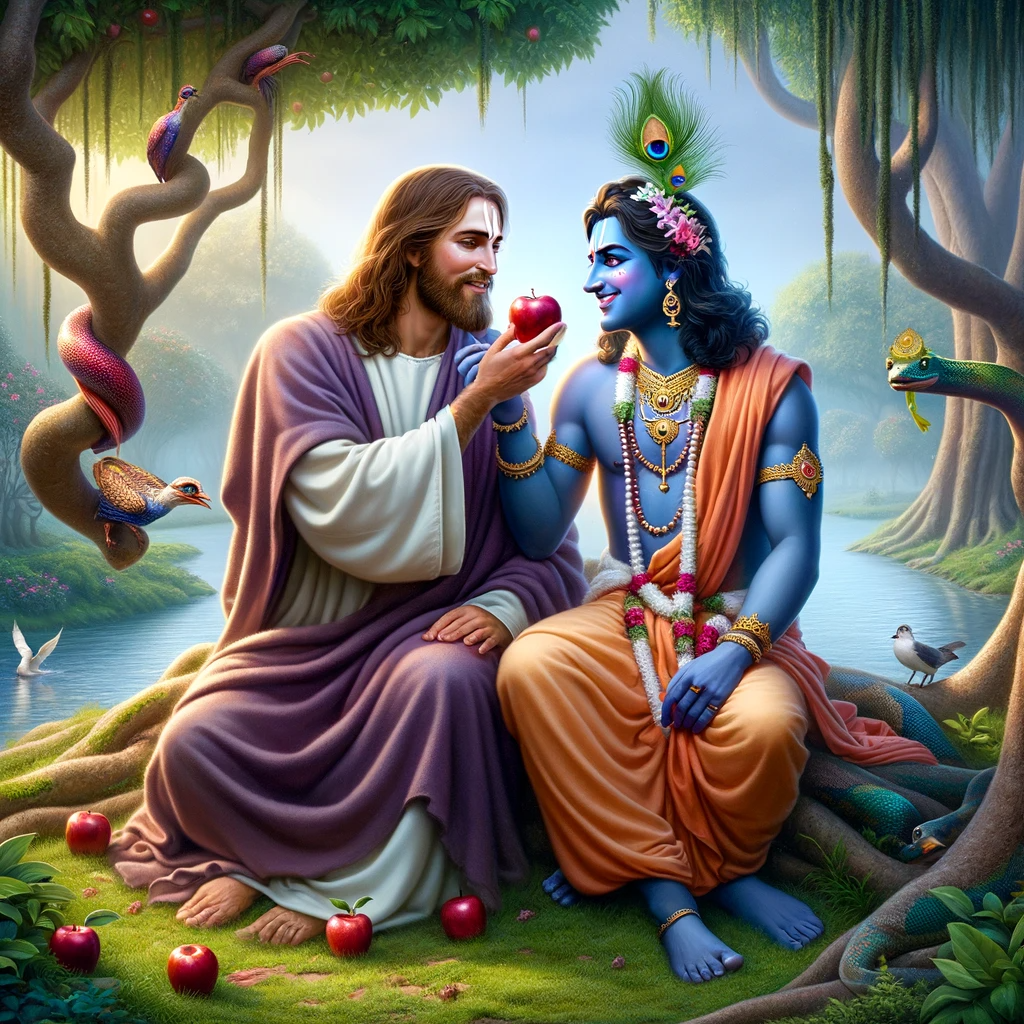
Artistic depiction of Jesus and Krishna sitting together under a tree, sharing an apple.

Introduction

Welcome to the central hub for THEO 1432: The Religious Quest. This page serves as a dynamic study guide, consolidating resources, key concepts, vocabulary, and summaries from our comparative exploration of Hindu and Christian sacred texts. Our journey focuses on themes of Creation, Creativity, and Recreation/Play (Līlā).

This guide integrates the essential content previously found in `Study_Guide.html`. Use the navigation above or the table of contents (on larger screens) to explore. Remember, theology is faith seeking understanding – let's engage with these rich traditions thoughtfully and respectfully.

(Looking for the course syllabus? Click here)

Overall Course Themes

These themes weave through our comparative study:

View Overall Themes
  • Creation & Causality: Narratives of origin (Genesis, Vedic hymns, Purāṇas) and philosophical concepts of material, efficient, and final causes.
  • Nature of Reality: Concepts like non-dualism (Advaita), qualified non-dualism (Viśiṣṭādvaita), the One and the Many, matter and spirit/energy.
  • Divine Play (Līlā): Understanding divine action as spontaneous, joyful play rather than necessity.
  • Ethics & Duty (Dharma): Investigating moral responsibility, right action, and cosmic/social order.
  • Knowledge & Ignorance: Exploring paths to wisdom (Jñāna Mārga) and overcoming ignorance (avidyā).
  • Devotion (Bhakti): Understanding the path of love towards a personal deity (Kṛṣṇa, Devī, Christ).
  • Scriptural Interpretation: Recognizing context, language, genre (Śruti, Smṛti, Gospel), and interpretive methods (allegory, Mīmāṃsā).
  • Self & Identity: Questioning the nature of the self (Ātman, "I") and its relationship to the divine (Brahman, God).
  • Comparative Method: Engaging deeply with individual traditions before drawing comparisons.

Unit Summaries

Unit 1: Foundations & Methods (Approx. Jan 14 - Jan 21)

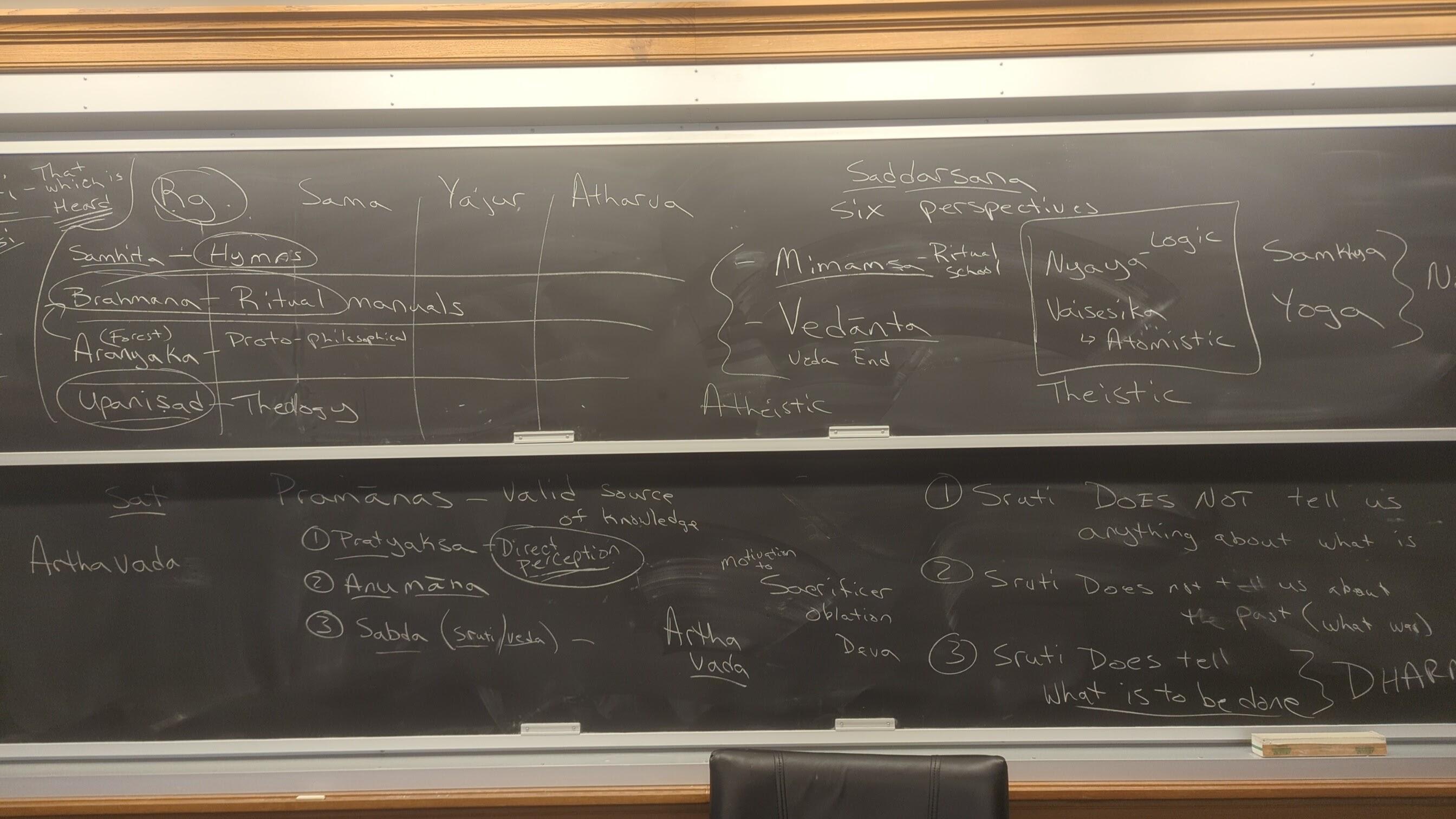
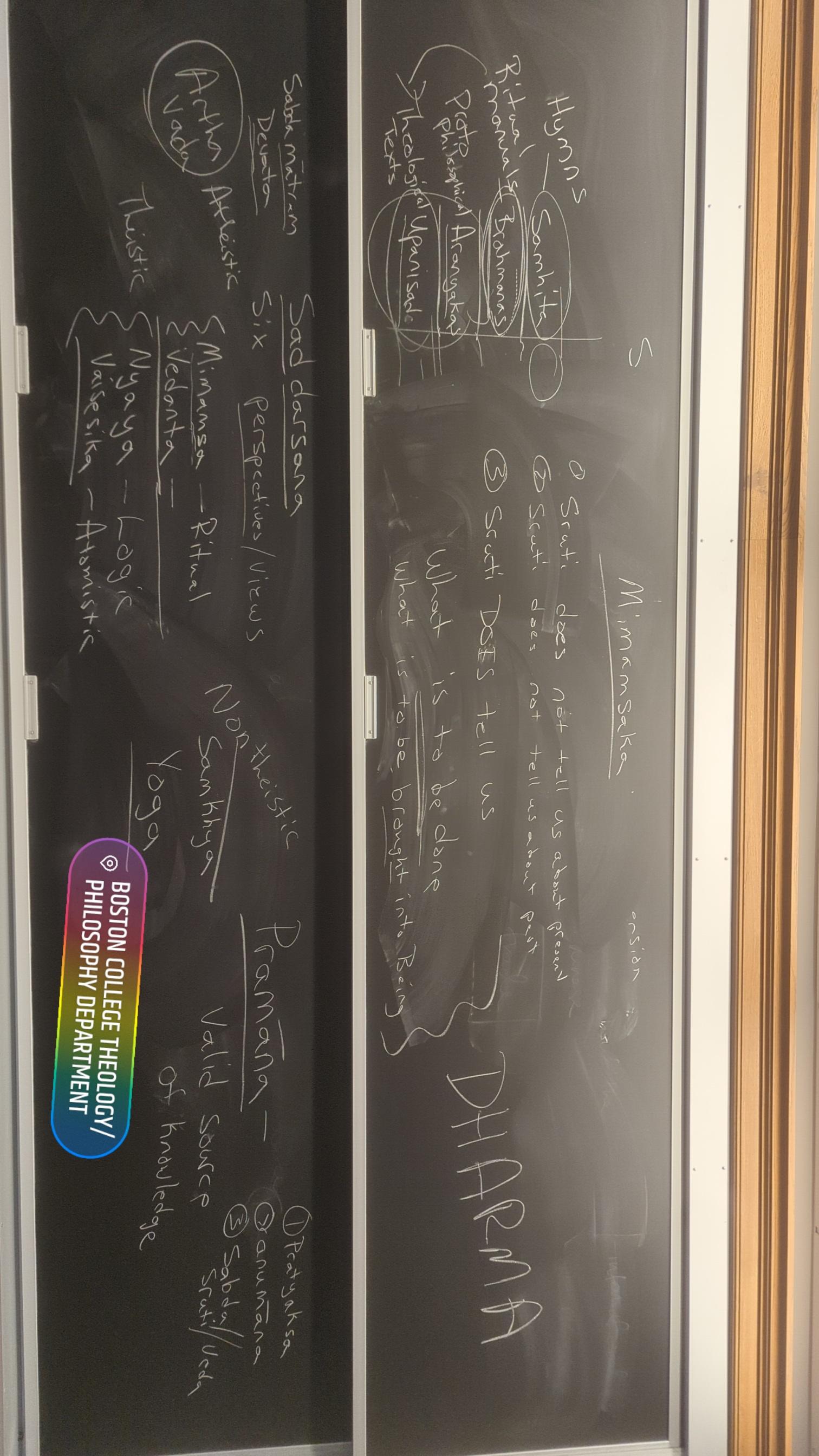
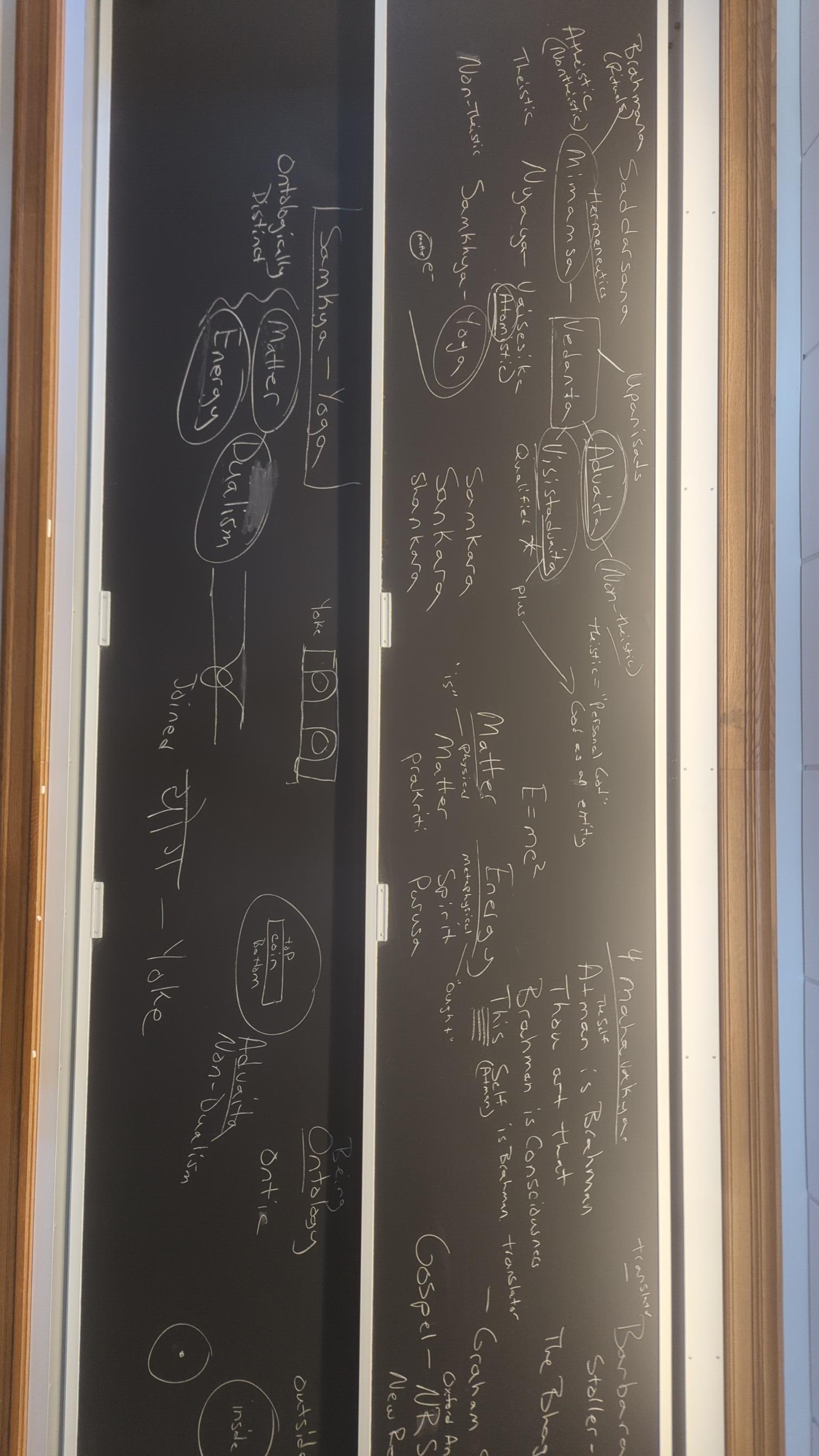
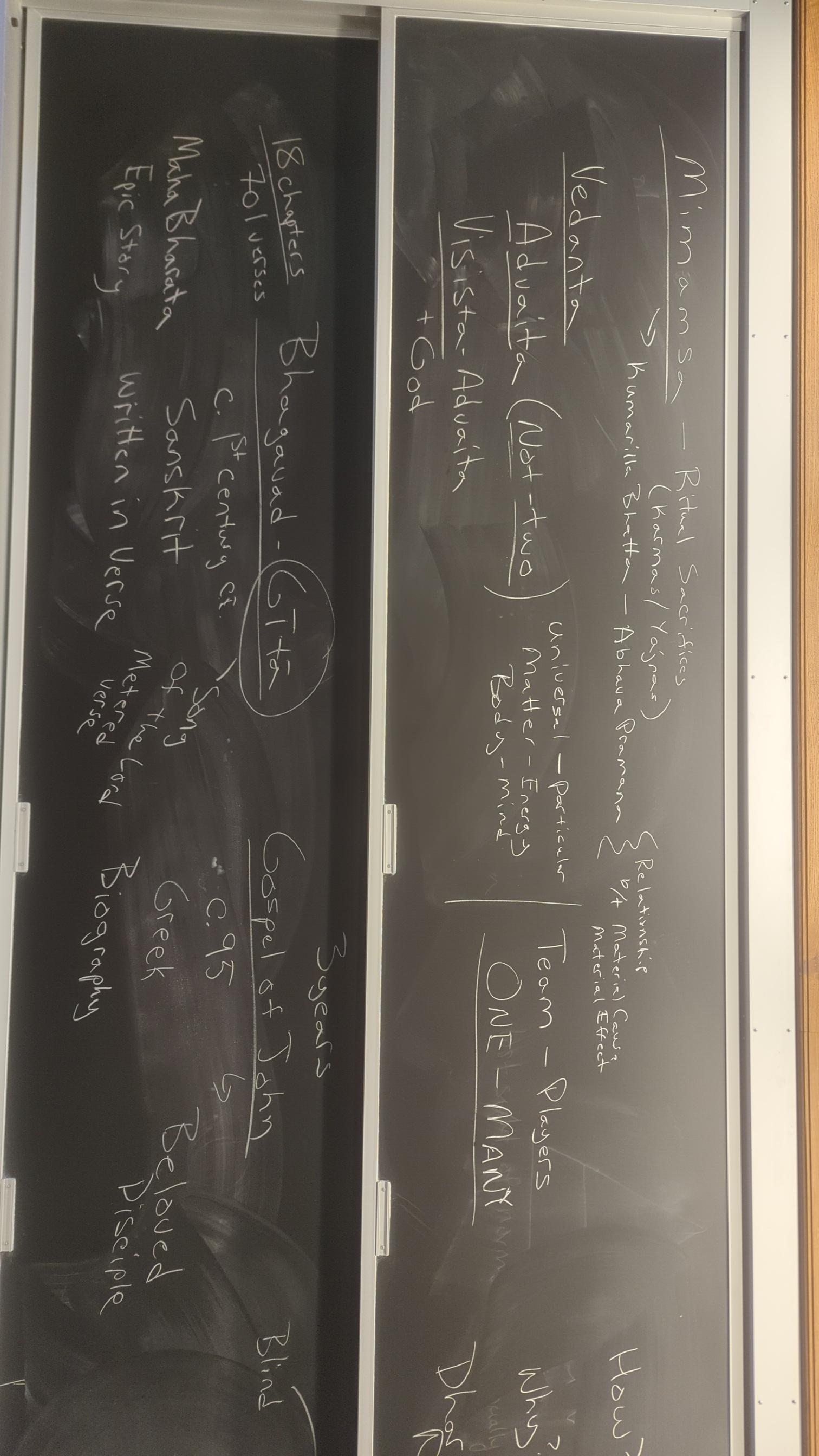
Established the course's theological framework (*fides quaerens intellectum*). Introduced the Hindu canon (*Śruti* - Vedas, its structure: *Saṃhitā, Brāhmaṇa, Āraṇyaka, Upaniṣad*) and the six orthodox schools (*Ṣaḍ-darśana*). Focused on *Mīmāṃsā* (ritual interpretation, *arthavāda*, *dharma* as action).

Unit 2: Creation Narratives (Approx. Jan 16 - Jan 30)

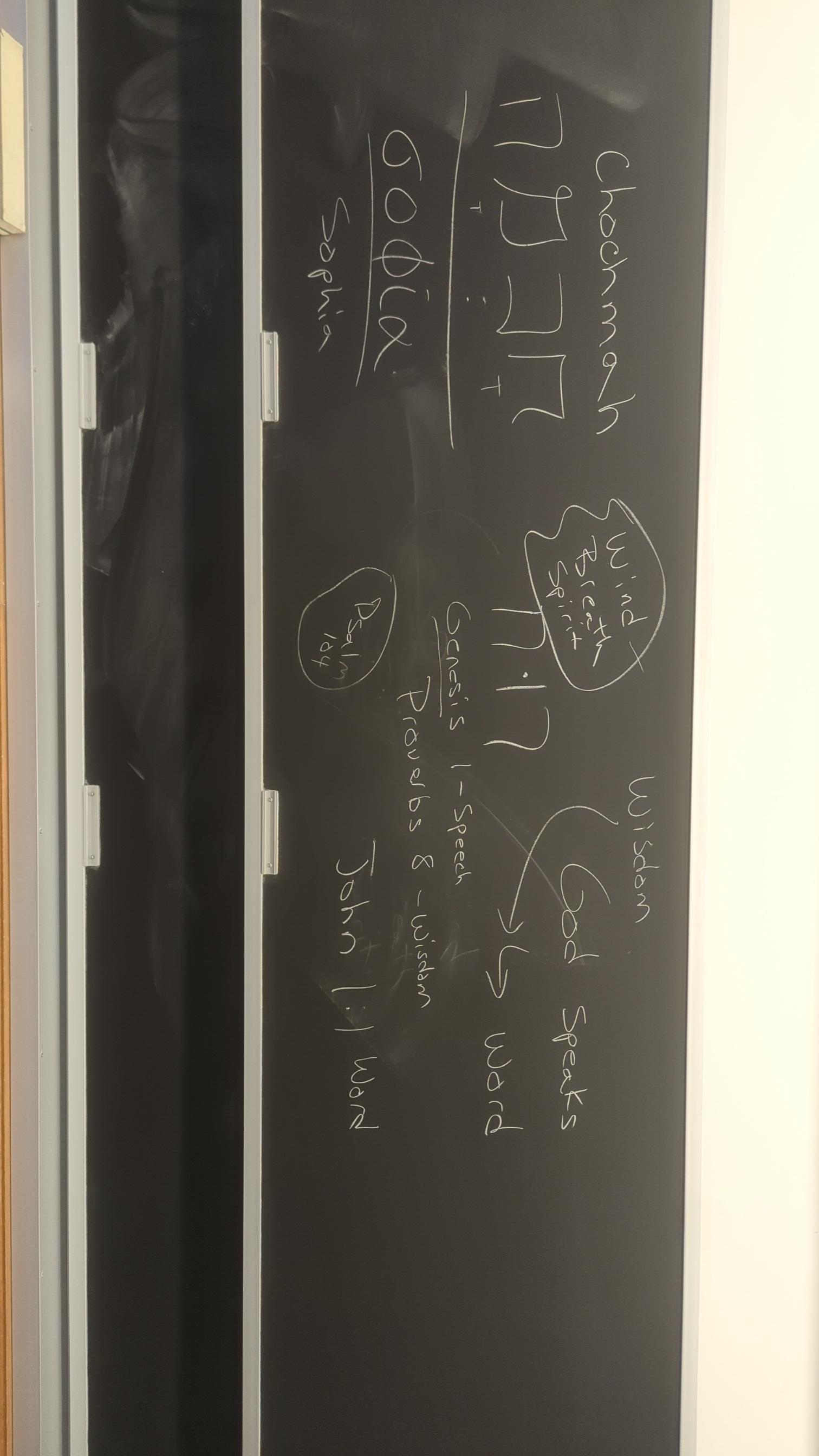
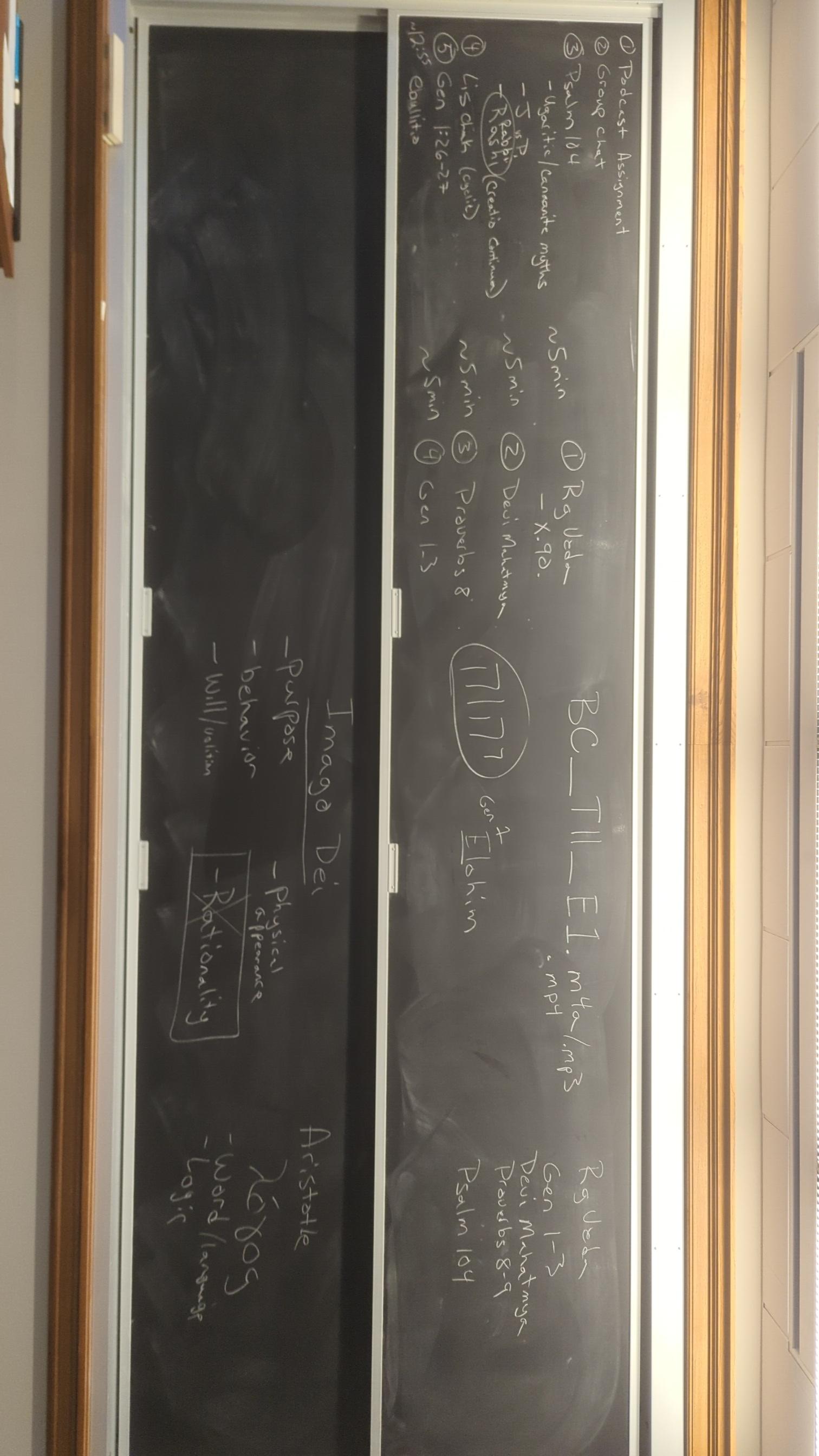
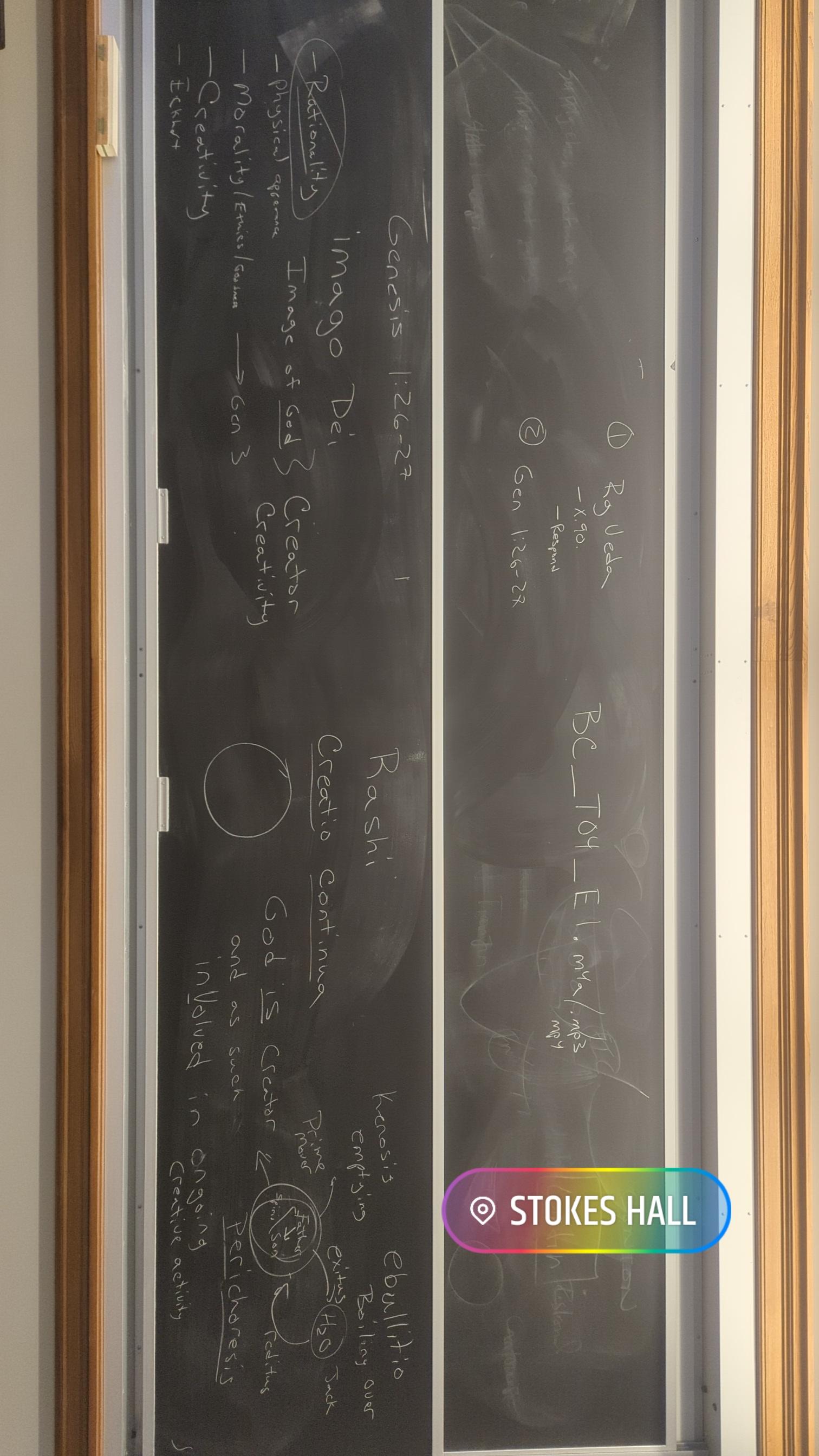
Comparative analysis of creation accounts: Genesis 1-3 (Elohim/YHWH, Imago Dei, Garden narrative, contrast with *Enūma Eliš*), ṚgVeda Hymns (X.90, X.121, X.129 - sacrifice, golden embryo, questioning), Proverbs 8-9 (Wisdom/Sophia personified, creation role), Psalm 104 (parallels/contrasts with Genesis 1, Canaanite context).

Unit 3: Devī & Divine Power (Approx. Jan 28)

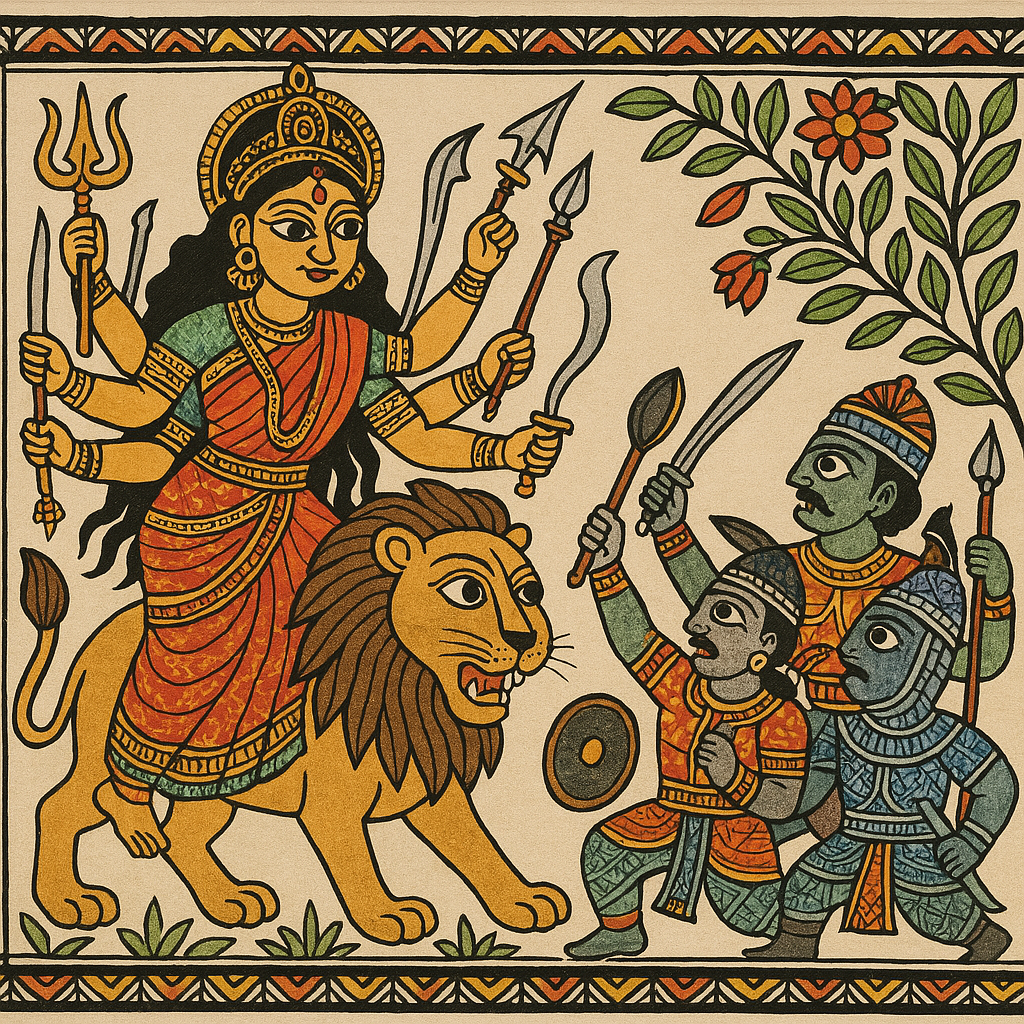
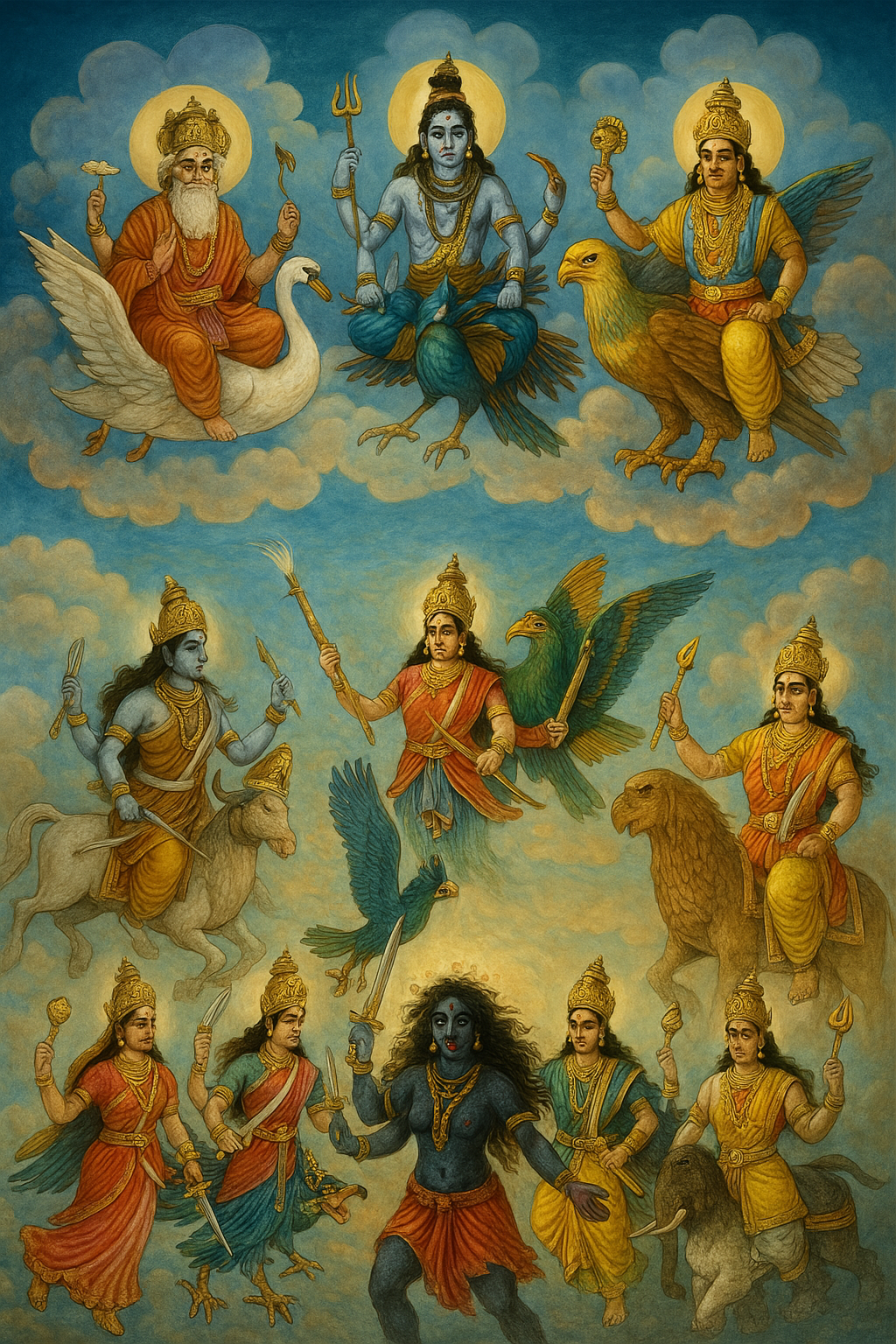
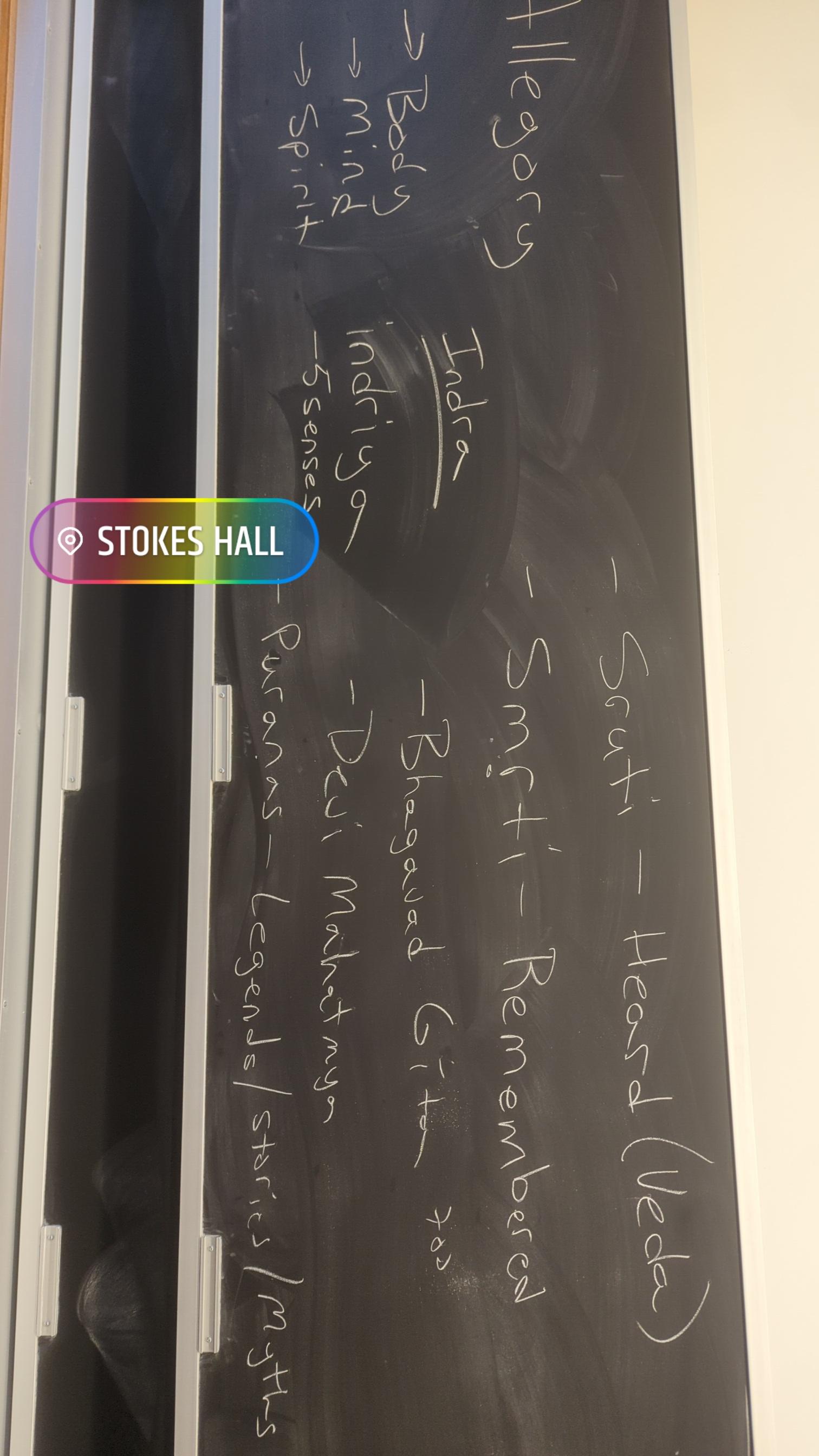
Introduction to Śāktism (Devī worship). Explored the *Devī Māhātmyam* (Smṛti text) through an allegorical lens (Suratha/Samādhi/Medhas, demons as inner obstacles). Discussed *Śakti* (divine power), the three *guṇas* (Tamas, Rajas, Sattva), and the iconography of Durgā and Kālī.

Unit 4: Advaita Vedānta & Mahāvākyas (Approx. Feb 4 - Feb 13)

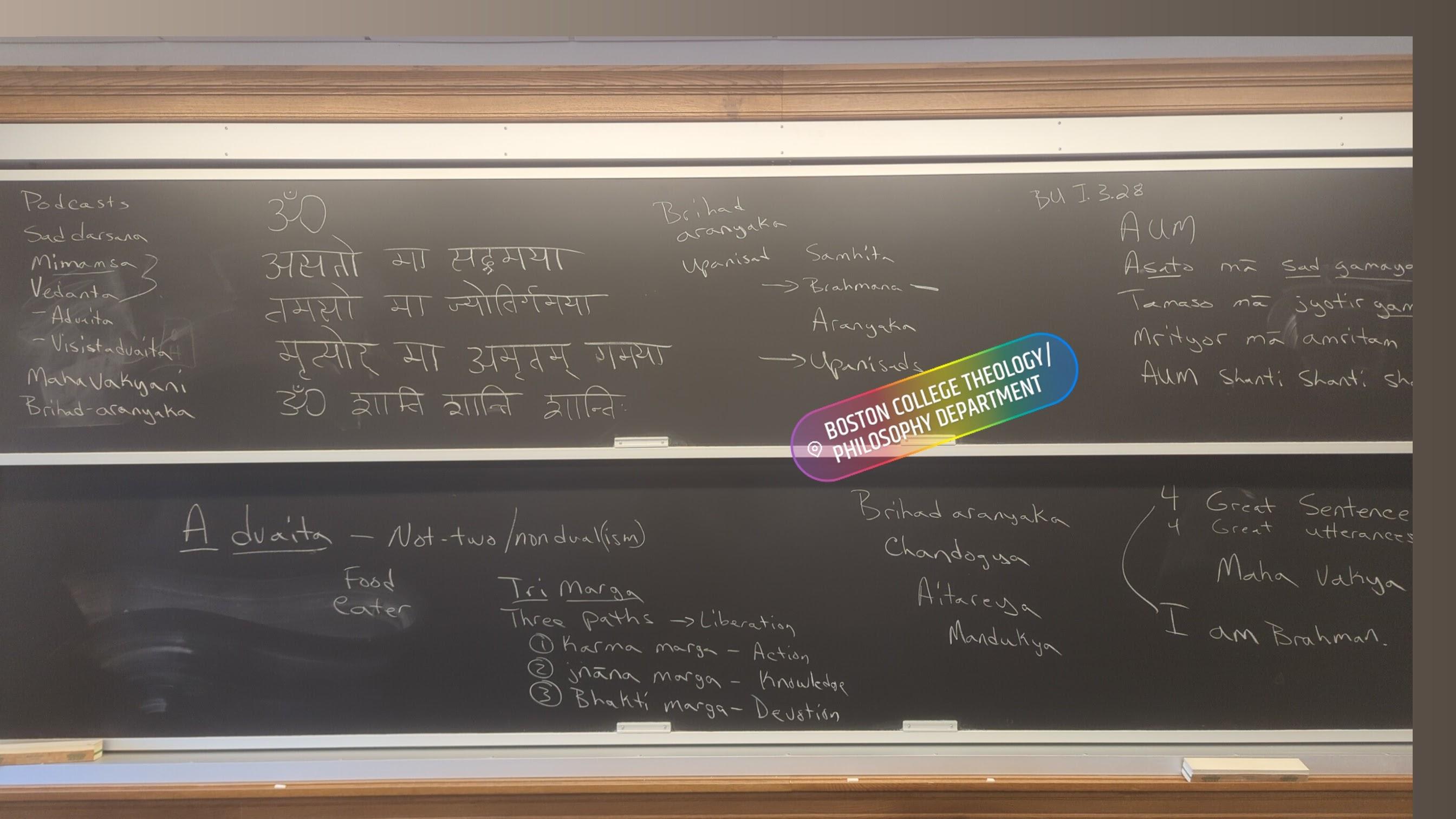
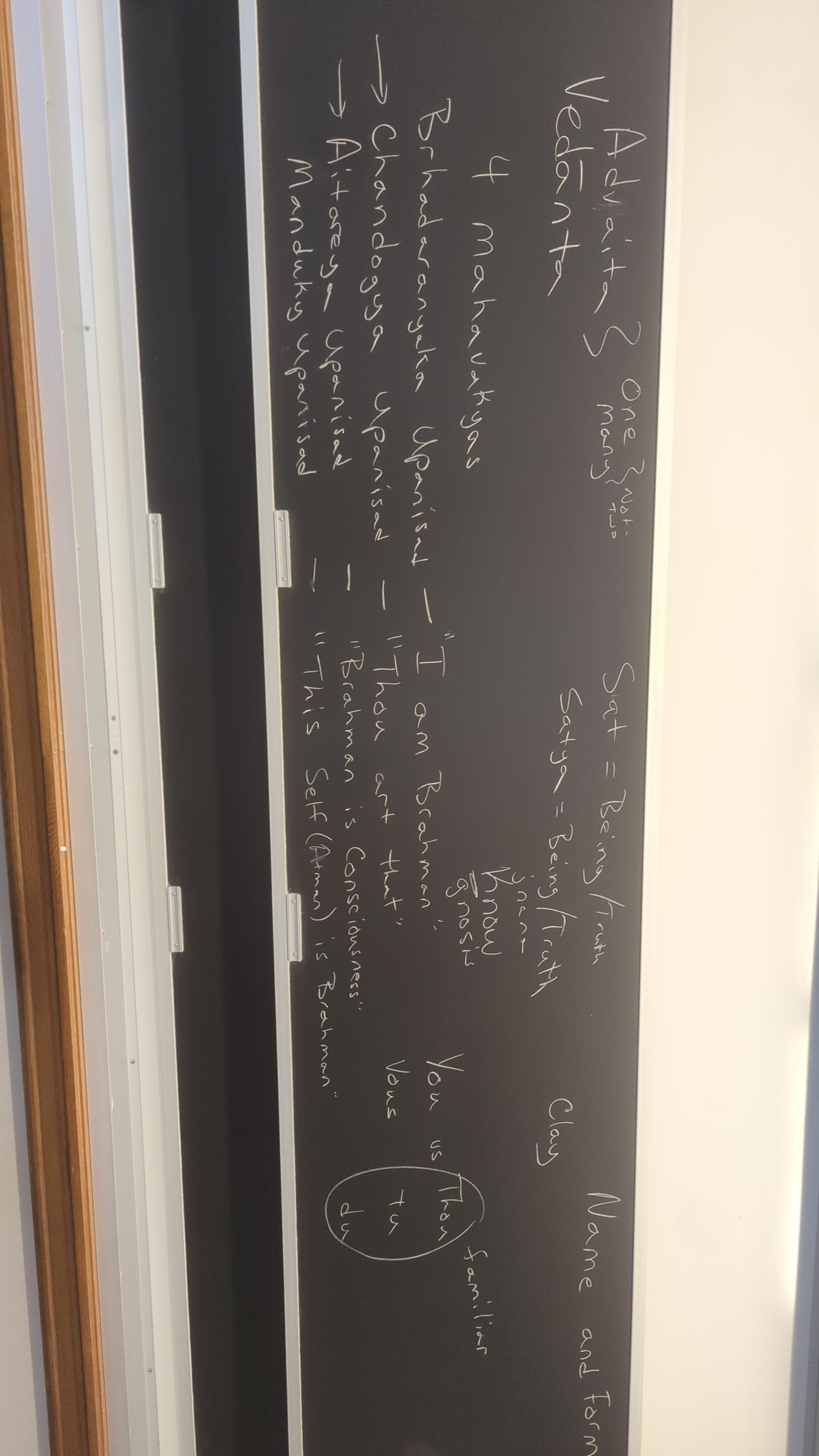
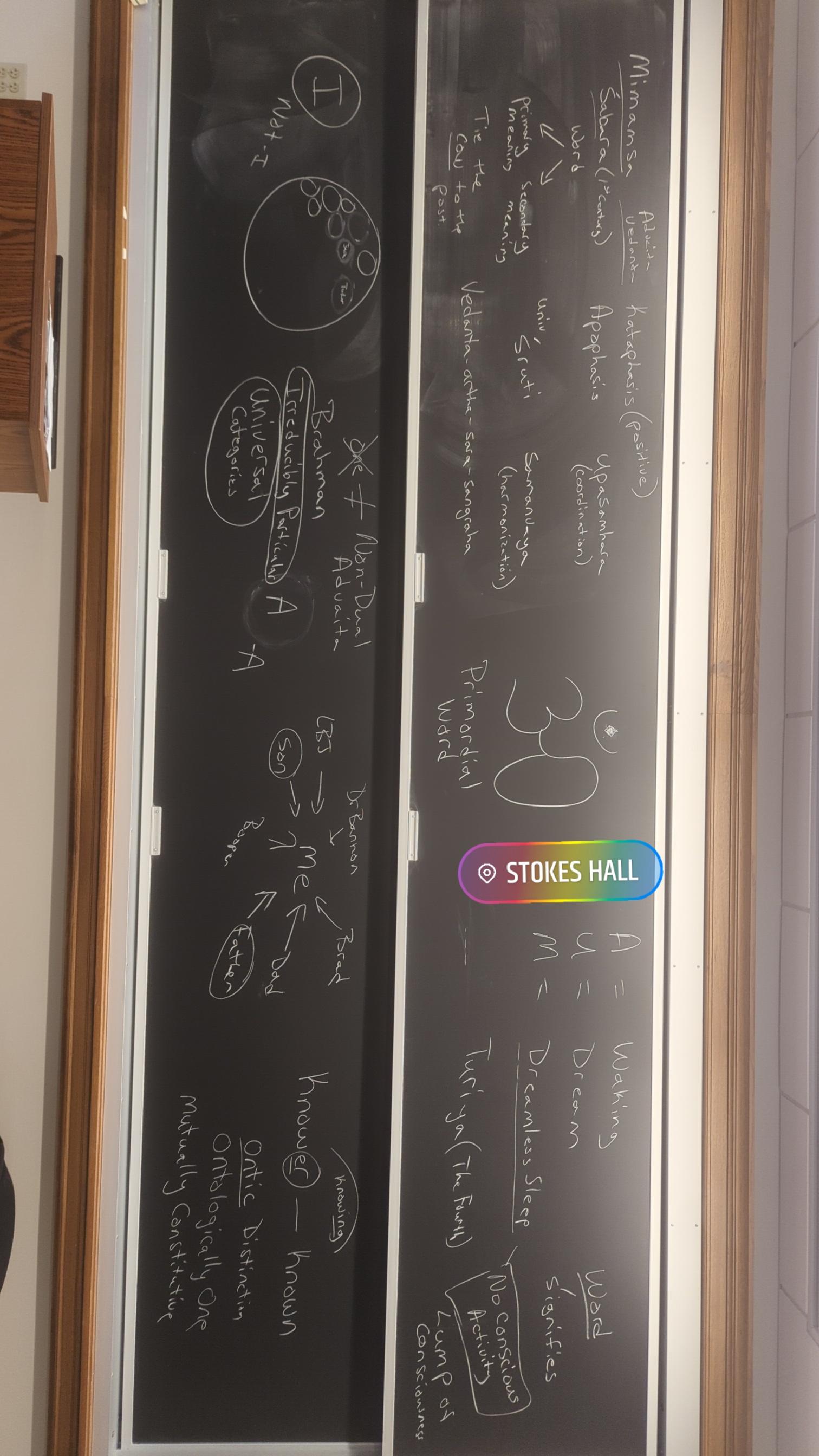
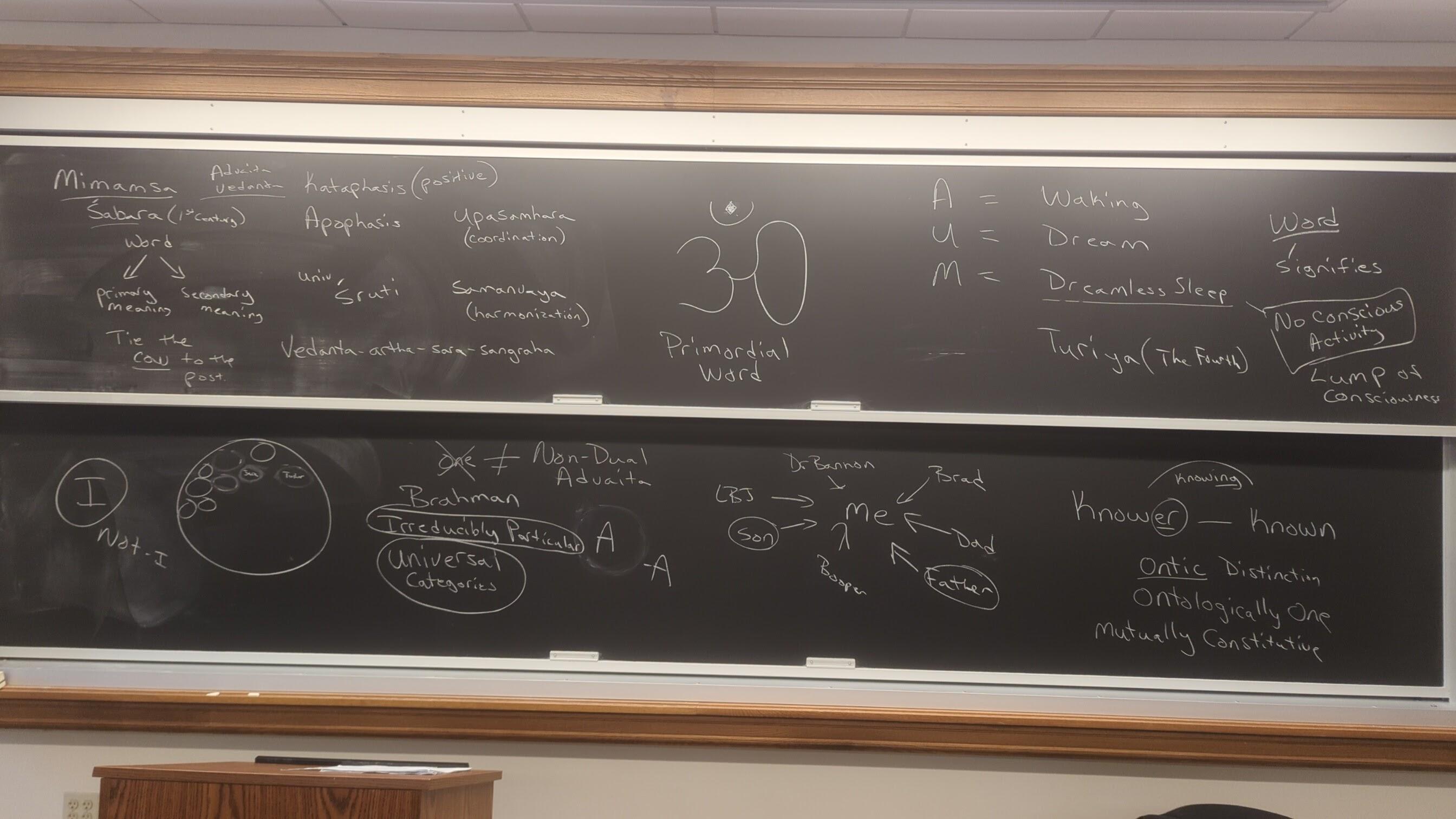
Focused on Advaita Vedānta (non-dualism). Studied the four *Mahāvākyas* ("Great Sayings") through key Upaniṣads: *Bṛhadāraṇyaka* (Ahaṃ Brahmāsmi), *Chāndogya* (Tat Tvam Asi - using analogies like clay, rivers, salt, seed), *Aitareya* (Prajñānam Brahma), and *Māṇḍūkya* (Ayam Ātmā Brahma - exploring Om and states of consciousness). Emphasized interpretive harmony (*Samanvaya*).

Unit 5: Līlā, Kṛṣṇa & Bhakti (Approx. Feb 18 - Feb 27)

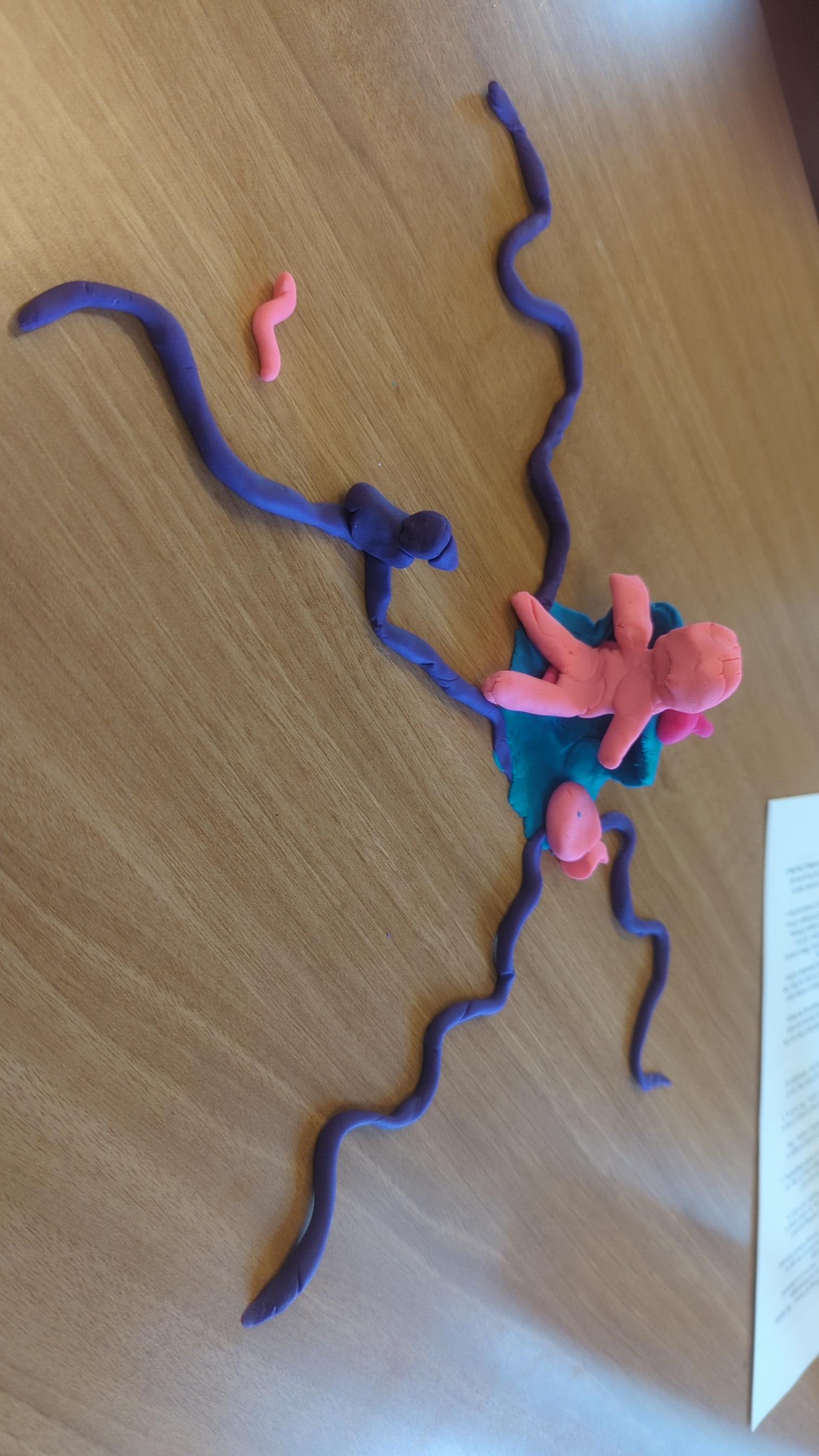
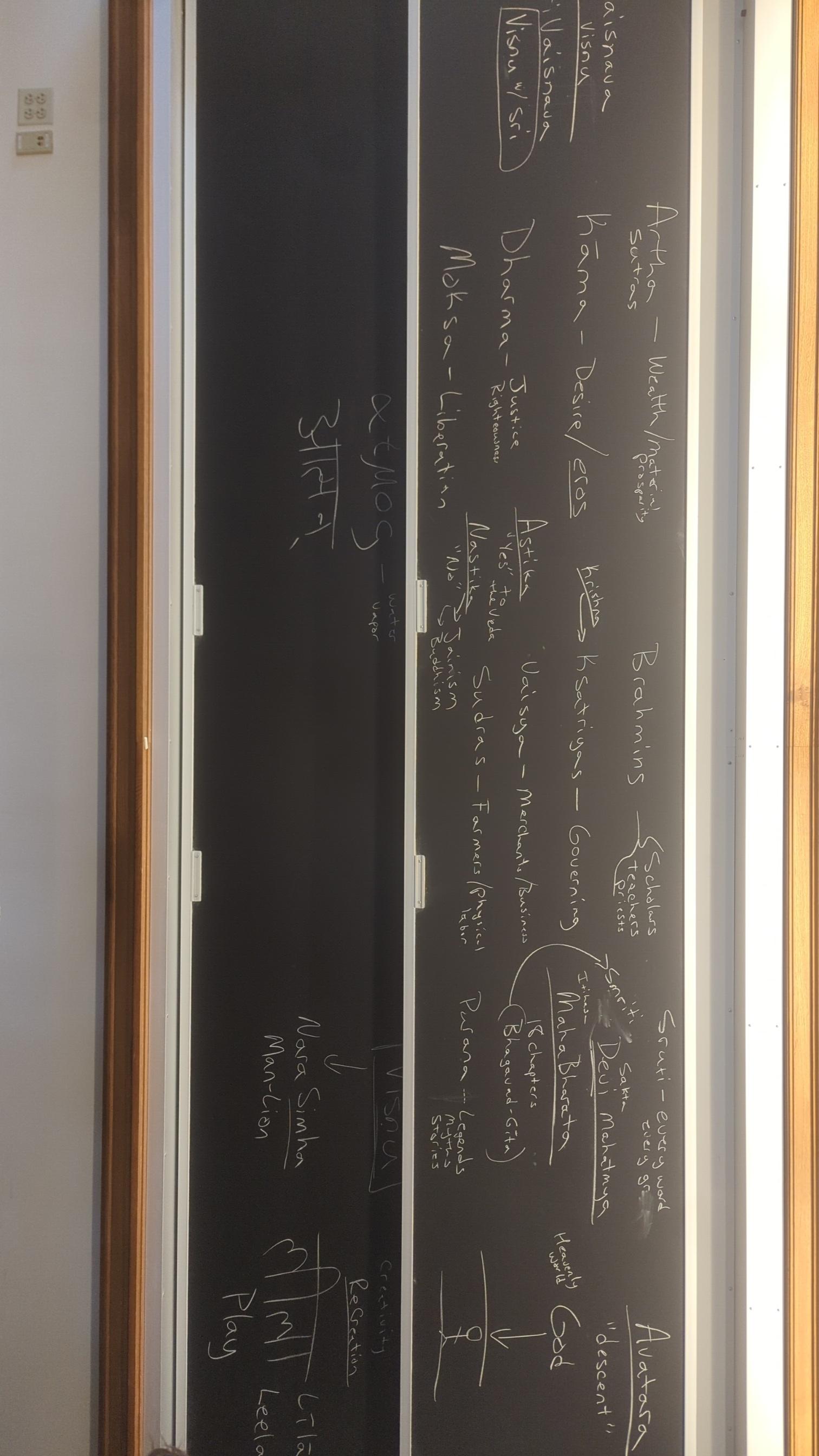
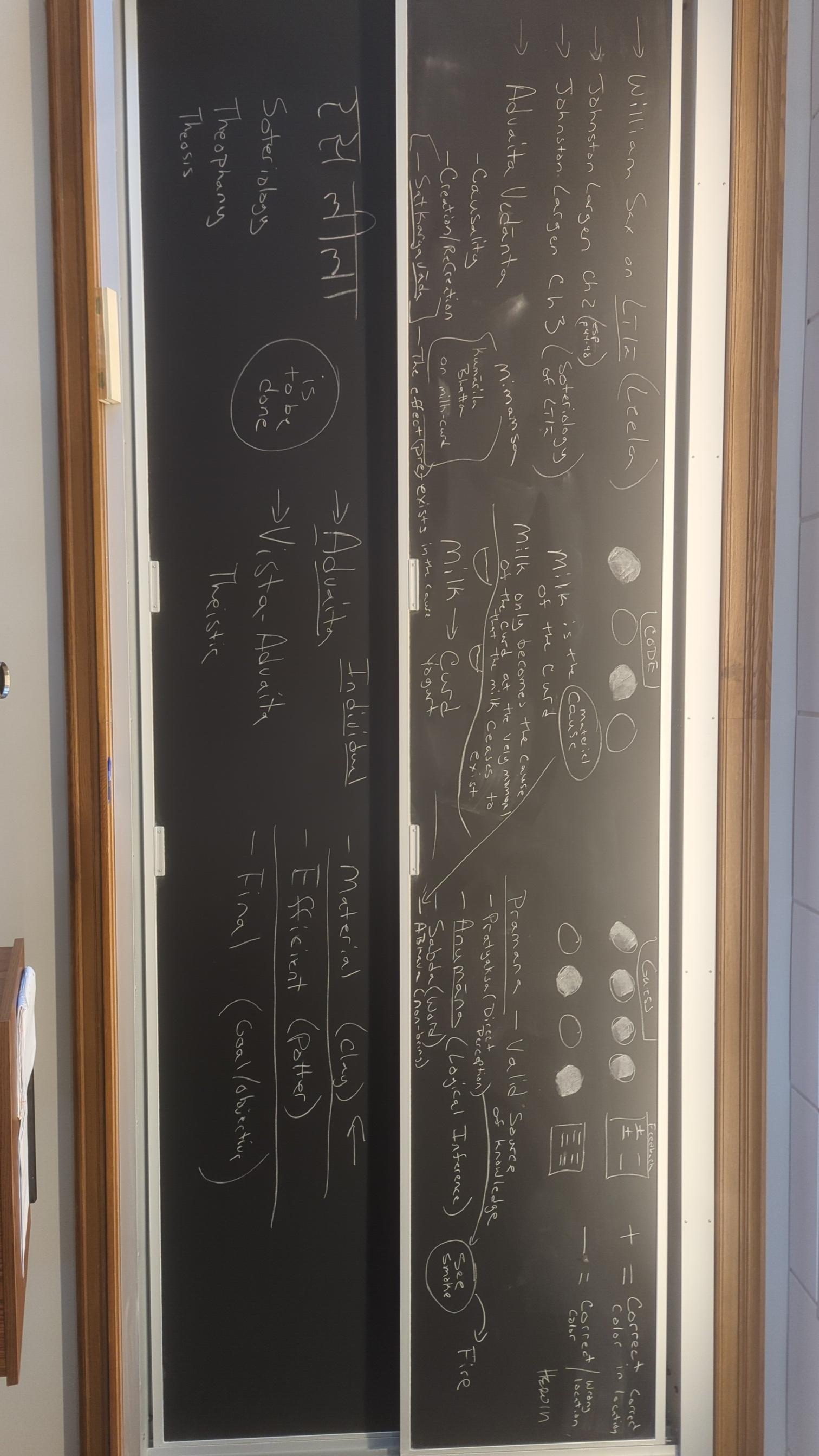
Introduced *Līlā* (divine play) via Sachs and Johnston Lørgen readings. Reviewed Vedānta schools (*Advaita* vs. *Viśiṣṭādvaita*) and causality. Introduced *Pramāṇas* (sources of knowledge), focusing on *Abhāva* (non-being/absence) via Kumārila Bhaṭṭa (milk-to-curd). Introduced Kṛṣṇa, the *avatāra* concept (using Narasimha story), and stories from the Bhāgavata Purāṇa (Kṛṣṇa eating mud, dancing on Kaliya) illustrating Līlā and the *Bhakti Mārga*.

Unit 6: Bhagavad Gītā & Gospel of John (Approx. Mar 11 - Apr 15)

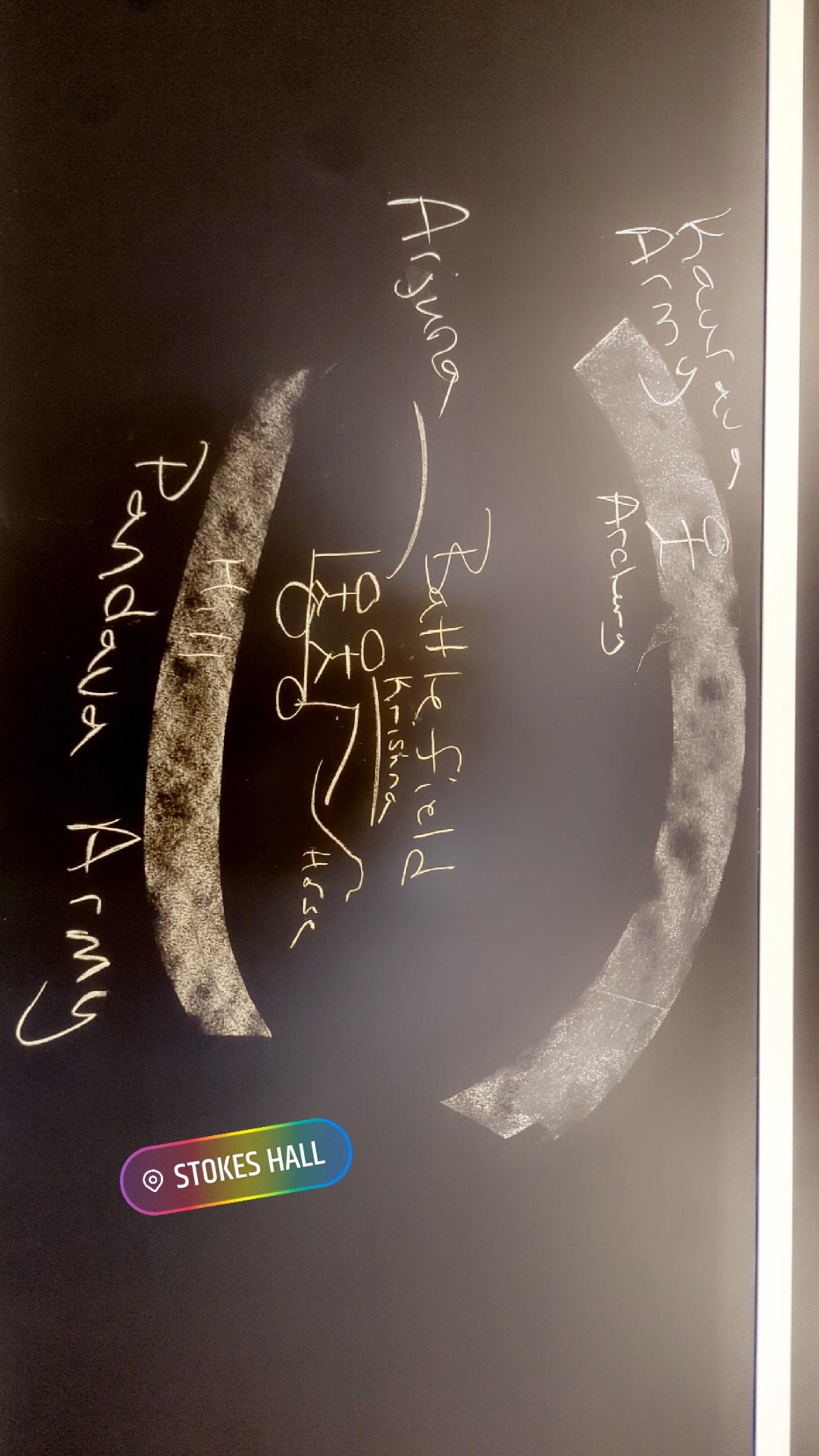
Comparative study of central texts. *Bhagavad Gītā*: Context (Mahābhārata), Arjuna's dilemma, Kṛṣṇa's teachings on *Dharma*, *Karma Yoga* (detached action), the immortal *Ātman*, *Jñāna*, *Bhakti*, *Lokasaṅgraha*, *Brahman Nirvana*. *Gospel of John*: High Christology, *Logos* prologue, miracles as "signs" (*sēmeia*), "I AM" statements, knowing vs. believing, themes of light/darkness, water/spirit, role of the "beloved disciple," Father/Son relationship, foot washing.

Class Agenda & Resources

Key Concepts & Philosophies

Expand Key Concepts

Advaita Vedānta (Non-Dualism)

School asserting *Advaita* ("not two"). Ātman = Brahman. Multiplicity is ultimately illusory (*māyā*) or relative (*ontic* difference within *ontological* unity). Liberation (*mokṣa*) through knowledge (*jñāna*). (See Feb 4 Notes, Feb 13 Notes)

Viśiṣṭādvaita Vedānta (Qualified Non-Dualism)

School asserting "qualified non-dualism." Brahman is ultimate but possesses real attributes, including distinct souls (*cit*) and matter (*acit*) as its "body". Theistic, emphasizing *bhakti* to a personal God (Īśvara/Viṣṇu). (See Feb 18 Notes)

Līlā (Divine Play)

Divine action as spontaneous, joyful play, not driven by necessity. Explains creation and divine interaction (esp. Kṛṣṇa). (See Sax Reading, Johnston Lørgen, Feb 20 Notes)

Dharma

Complex term: duty, righteousness, cosmic law, ethics, inherent nature. In Mīmāṃsā, it's "what is to be done" via ritual. In Gītā, includes societal duty (*svadharma*) and universal righteousness. (See Intro Handout, Jan 21 Notes, Mar 18 Notes)

Karma

Action, work, deed. In Mīmāṃsā, specifically Vedic ritual. Broadened in Gītā to all action. Includes the law of cause and effect shaping future lives (*saṃskāra*). *Karma Yoga* is detached action. (See Mar 25 Notes)

Pramāṇas (Sources of Knowledge)

Valid means of knowing: *Pratyakṣa* (perception), *Anumāna* (inference), *Śabda* (testimony/scripture), *Upamāna* (analogy), *Arthāpatti* (postulation), *Abhāva* (non-perception/absence). (See Feb 25 Notes)

Causality

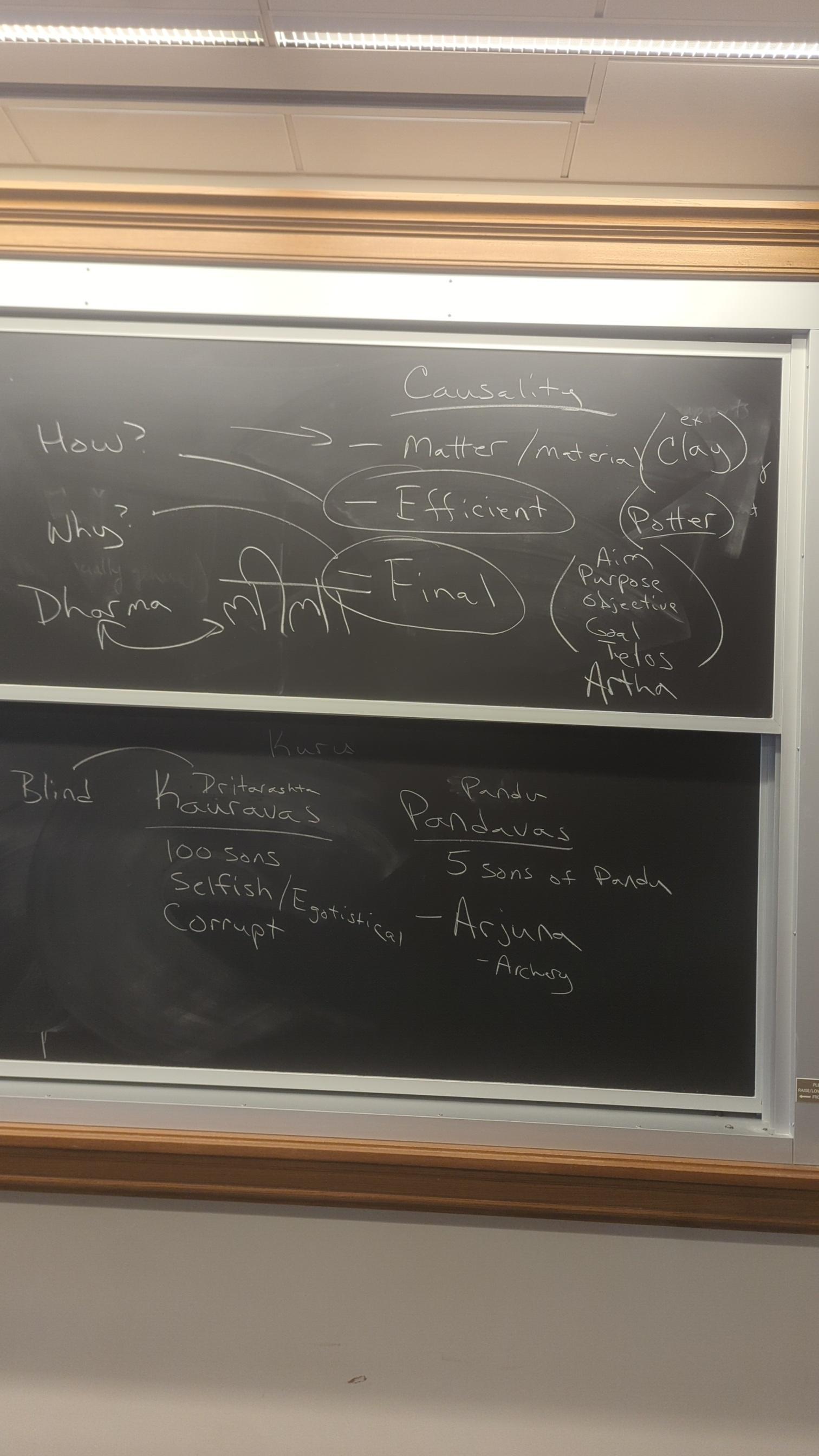
Types: Material (substance), Efficient (agent/shaper), Final (*telos*/purpose, e.g., Līlā). Discussed in relation to creation and different Vedānta schools. (See Feb 18 Notes, Mar 11 Notes)

Śruti vs. Smṛti

*Śruti*: "Heard," revealed, authorless scripture (Vedas). *Smṛti*: "Remembered," traditional texts derived from Śruti (Epics, Purāṇas). (See Intro Handout, Jan 21 Notes)

Mahāvākyas

"Great Sayings" summarizing Upaniṣadic truth: *Ahaṃ Brahmāsmi*, *Tat Tvam Asi*, *Prajñānam Brahma*, *Ayam Ātmā Brahma*. (See Mahavakyas Handout, Feb 4 Notes - Feb 13 Notes)

Trimārga

Three paths to liberation: *Karma Mārga* (action), *Jñāna Mārga* (knowledge), *Bhakti Mārga* (devotion). (See Intro Handout, Mar 18 Notes)

Avatāra

"Descent"; divine manifestation (esp. Viṣṇu) in worldly form. (See Intro Handout, Feb 20 Notes)

Logos & Sophia

*Logos* (Greek): Word, Reason. Central in John 1. *Sophia* (Greek) / *Ḥokmāh* (Hebrew): Wisdom. Personified in Proverbs 8. (See Jan 23 Notes, Mar 13 Notes)

Imago Dei

"Image of God" (Latin). Concept from Genesis 1:26-27. (See Jan 16 Notes)
Comprehensive Vocabulary

Expand Vocabulary List
Abhava Pramāṇa (अभाव प्रमाण)
Valid source of knowledge through non-existence or absence.
Abhiṣikta (अभिषिक्त)
Anointed one (Sanskrit for Christos).
Adhikara (अधिकार)
Qualification, authority (esp. for rituals).
Aditam (अदितम्)
Things accomplished together (from mantra).
Adonai (אֲדֹנָי)
Hebrew term meaning "My Lord," used as a substitute for the Tetragrammaton.
Advaita (अद्वैत)
Non-dualism; "not two".
Aham (अहम्)
"I."
Aham Brahmāsmi (अहं ब्रह्मास्मि)
"I am Brahman" (Mahāvākya).
Aitareya Upaniṣad (ऐतरेय उपनिषद्)
An Upaniṣad of the Ṛg Veda.
Akarma (अकर्म)
Inaction.
Akṣa (अक्ष)
Eye.
Amṛtam (अमृतम्)
Immortality, nectar.
Ananta (अनन्त)
Endless, eternal.
Anu (अनु)
After.
Anumāna (अनुमान)
Inference (Pramāṇa).
Anuśloka (अनुश्लोक)
Sanskrit verse meter.
Anuṣṭubh (अनुष्टुभ्)
Common Sanskrit poetic meter.
Apauruṣeya (अपौरुषेय)
Not of human origin (describing Vedas).
Apīti (अपीति)
Merging ('M' of Om).
Apophatic / Apophasis (ἀπόφασις)
Theology via negation.
Āpti (आप्ति)
Obtaining ('A' of Om).
Āraṇyaka (आरण्यक)
"Forest texts" (part of Veda).
Arjuna (अर्जुन)
Pāṇḍava hero in Bhagavad Gītā.
Artha (अर्थ)
Goal; material wealth (Purushartha).
Arthavāda (अर्थवाद)
Motivating statement in scripture.
Āryan
Historical term for Indo-European migrants.
Asat (असत्)
Non-being, untruth.
Āśrama (आश्रम)
Stages of life.
Astika (आस्तिक)
Orthodox (accepting Veda).
Asura (असुर)
Demon, anti-god.
Atharva Veda (अथर्ववेद)
The fourth Veda.
Ātman (आत्मन्)
The Self, soul.
Atmos (ἀτμός)
Greek for vapor.
Atomist
Philosophy based on indivisible units.
Avatāra (अवतार)
"Descent"; divine manifestation.
Ayam Ātmā Brahma (अयम् आत्मा ब्रह्म)
"This Self is Brahman" (Mahāvākya).
Baal (בַּעַל)
Canaanite god.
Bāla Kṛṣṇa (बालकृष्ण)
Child Kṛṣṇa.
Bara (בָּרָא)
Hebrew: create/separate.
Bereshit (בְּרֵאשִׁית)
"In the beginning" (Hebrew).
Bhagavad Gītā (भगवद् गीता)
"Song of the Lord."
Bhāgavata Purāṇa (भागवतपुराण)
Purāṇa focusing on Kṛṣṇa.
Bhagavān (भगवान्)
Lord, Blessed One.
Bhakti (भक्ति)
Devotion.
Bhakti Mārga (भक्तिमार्ग)
Path of devotion.
Bharata (भारत)
Traditional name for India; ancient clan.
Bhāva (भाव)
Being, existence.
bhuj (भुज्)
Sanskrit root: eat/enjoy.
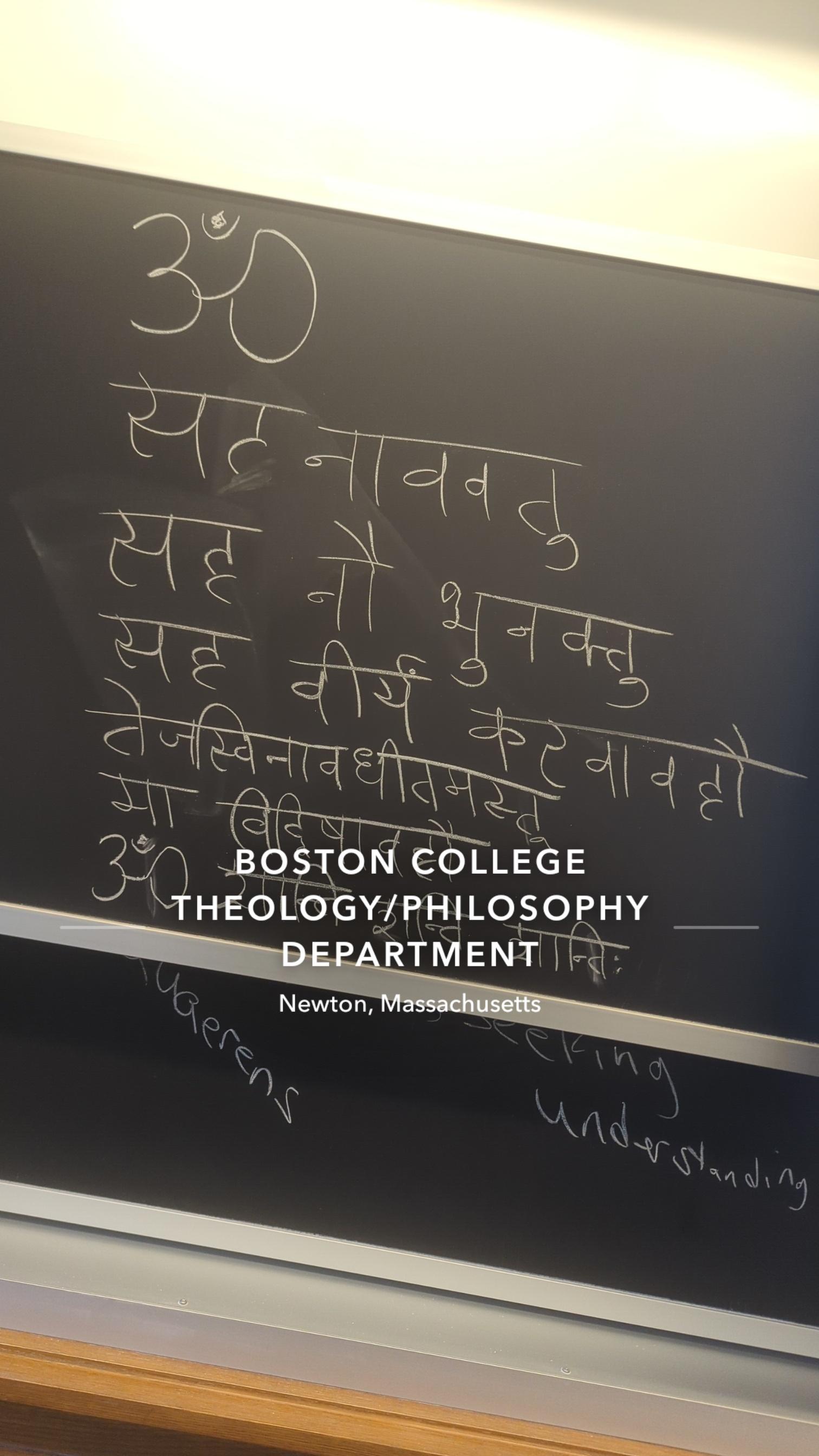
bhunaktu (भुनक्तु)
"Let us be nourished."
Bīja (बीज)
Seed.
Brahmacarya (ब्रह्मचर्य)
Student stage of life.
Brahman (ब्रह्मन्)
The ultimate reality.
Brāhmaṇa (ब्राह्मण)
Vedic ritual texts; priestly varṇa.
Bṛhad (बृहद्)
Great, large.
Bṛhadāraṇyaka Upaniṣad (बृहदारण्यक उपनिषद्)
Major Upaniṣad.
Canaanite
Ancient Near Eastern people.
Caste
Social stratification system.
Cataphasis (κατάφασις)
Theology via affirmation.
Chāndogya Upaniṣad (छान्दोग्य उपनिषद्)
Major Upaniṣad.
Christos (Χριστός)
Greek for "anointed one."
Creatio continua
"Continuous creation" (Latin).
Yam (ים)
Canaanite sea god.
Yajña (यज्ञ)
Sacrifice, ritual.
Yajur Veda (यजुर्वेद)
Veda of ritual formulas.
Yajñavalkya (याज्ञवल्क्य)
Sage in Bṛhadāraṇyaka Upaniṣad.
Yashoda (यशोदा)
Kṛṣṇa's foster mother.
YHWH (יהוה)
Tetragrammaton.
Yoga (योग)
Union, discipline; philosophical school.
Yoke
Joining bar (analogy for yoga).
Yud He Vav He (יהוה)
Hebrew letters for YHWH.

Key Comparative Points

Expand Comparative Points
  • Creation: Genesis (speech, order, Imago Dei) vs. Vedic Hymns (sacrifice, emanation, questioning) vs. Enūma Eliš (conflict).
  • God/Ultimate Reality: YHWH/Elohim vs. Brahman/Ātman (Advaita vs. Viśiṣṭādvaita) vs. Greek Logos.
  • Divine Manifestation: Avatāra (Hinduism) vs. Incarnation (Christianity).
  • Paths to Goal: Trimārga (Hinduism) vs. Faith/Grace/Works (Christianity).
  • Scripture: Śruti/Smṛti authority vs. Bible authority and interpretation.
  • Ethics: Dharma vs. Divine Law/Commandment/Love.
  • Knowledge vs. Devotion: Jñāna Mārga vs. Bhakti Mārga parallels Faith vs. Reason.

Primary Text Resources

Images & Descriptions

Study Tips & How to Use This Guide