 ```html
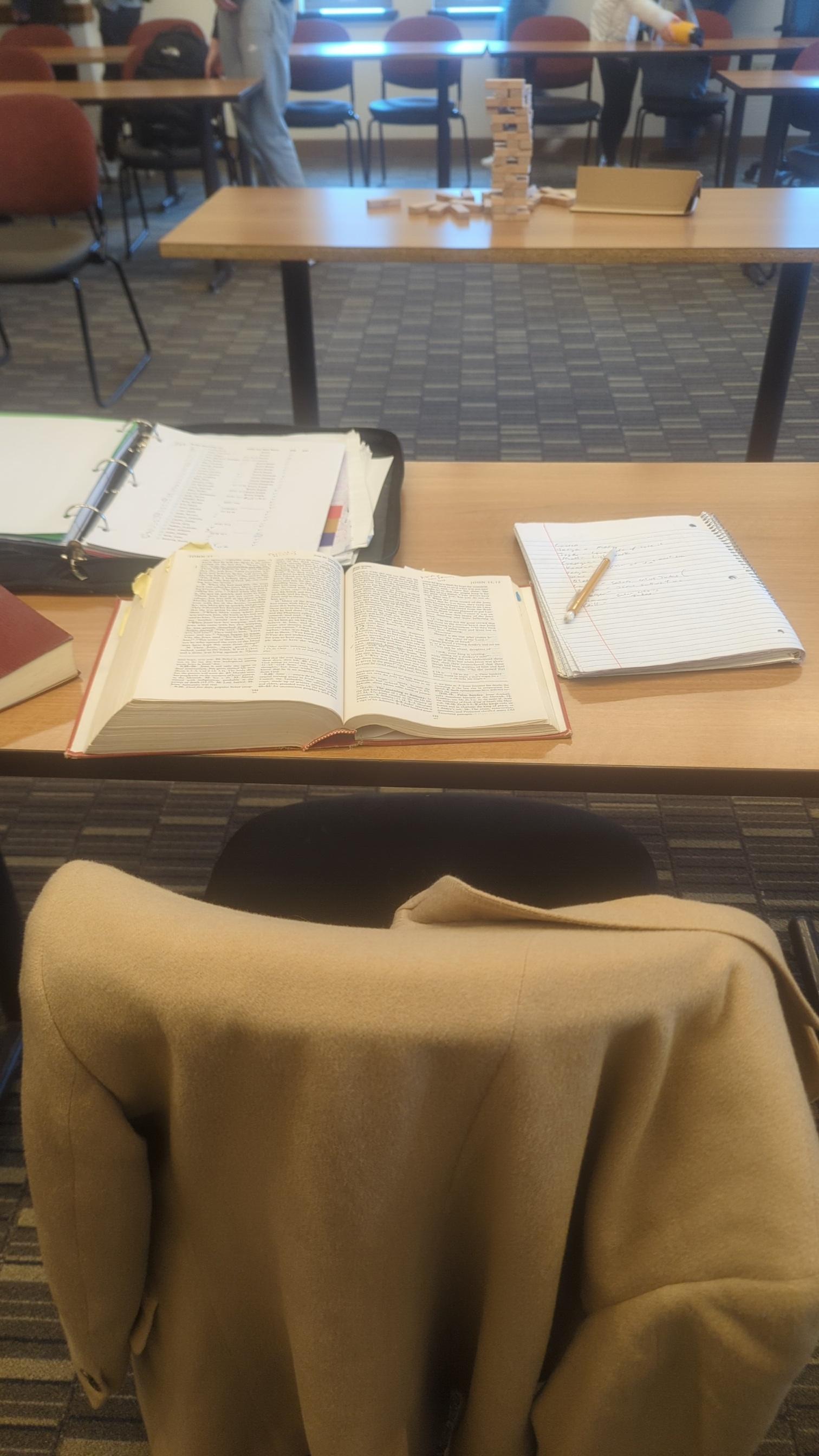
This class session, held on March 27th, began with a brief centering meditation led by Brad. Attendance was taken, establishing Group D (Olat, Luca, Matt, Mary, Cameron, Stella, Vanya, Serena) as the discussion leaders for the day, with Cameron taking notes. The leaders opted for a Jenga game as their introductory activity instead of Jeopardy. The main focus of the class was a detailed discussion of the Gospel of John, chapters 10 through 13, often referred to as the "hinge" of the gospel. Students explored various themes, including the "I am" statements ("I am the gate," "I am the good shepherd"), the nature of Jesus's relationship with the Father ("The Father and I are one"), the concept of non-dualism (comparing it briefly to Brahman/Ātman), the significance of the shepherd metaphor (self-sacrifice, exclusivity vs. inclusivity, potential power dynamics), the foreshadowing of Jesus's death (grain of wheat metaphor, laying down life), the role of belief and unbelief (hearing thunder vs. God's voice), the anointing by Mary and Judas's reaction, the raising of Lazarus as the seventh sign (and the significance of the fourth day), and the tension between Jesus's displays of humility (washing feet, riding a donkey) and his divine authority. The session concluded with Brad highlighting the completion of the seven signs in John and providing instructions for the next podcast assignment, differentiating tasks based on student groups (Group D to cover the Bhagavad Gītā, others to cover John).
[Brad] Let's take a moment and please put screens away and, try to shut out all the noise and try to be as fully present as we can be.
[singing bowl sound]
[silence with singing bowl]
[Brad] Let's take one breath together. Go ahead and breathe in. And let it out.
Cool and the gang, right?
[Brad] So, March 27th. We're in group D now. So we've got, our leaders are going to be Olat and Luca and Matt and, Mary and Cameron, you're taking notes today. And Stella and Vanya and, Serena. Yeah? Wait, Serena? Okay. And we're missing Jorge? And we're missing Ruby and Addison. Molly Dix?
[Student 1] No.
[Brad] Hi. And Serena? So Serena's out today?
[Student 2] She's not here, yeah.
[Brad] Okay.
[Brad] Okay, let's let's start with having our, our group leaders. If you're, if you're down. So we do, we do have two options today. One option would be for our team leaders to or our our discussion leaders to play Jenga.
[Student 3] I'm like really bad at it though.
[Brad] Other option is is as I do have the the Jeopardy game. But I don't have any new questions.
[overlapping chatter]
[Brad] It's up to, it's up to the the discussion leaders. Jenga? Jenga? You good with both? Let's go for Jenga then. All right, let's see. But if you're not, if you're not one of the team leaders, you gotta pull your team on. So what should be the rules? Cuz I feel like the rules keep shifting from class to class, so.
[Student 4] Mary.
[Student 5] What do you mean?
[Brad] Well...
[Student 5] I'm a believer in touch move.
[Brad] Touch...
[Student 5] You touch a block and you're taking it out.
[Brad] Okay, so if you...
[Student 5] And you can't feel the whole...
[Brad] Okay, so...
[Student 5] Go team!
[Brad] All right.
[Student 5] Half the skill is knowing which block...
[Brad] Knowing which block to pull. Okay.
[Student 5] By pure intuition.
[Student 6] Can you take any?
[Brad] We're gonna... Not from the top, right?
[Student 6] No.
[Brad] So we'll do, we'll go by, let's go... Get your head in the game. I just, I have very little control over this particular section of class. It's like the least control of all my five classes. This is the least control. So wait, so we're going to do the rules where if you touch it, you have to move it. Okay? And you can only use one hand at a time. You can switch hands, but you can only use one hand at a time.
[small group discussion occurred during this time]
[Brad] Nice job, nice job. Good job. They gotta think faster. Wow. Let's go. Cool. So, great determination. Where? So so Tuesday we'll have, Tuesday we'll do the Jeopardy, Jeopardy game. So if you want to, you know, study and prepare for that, you know. Should I give you the the Jeopardy clues and answers ahead of time?
[Student 7] No.
[Brad] Yeah.
[Student 8] That isn't fair. I like how we have to work for it.
[Brad] Yeah. I had one, I had one student last year that yeah, I did not expect that at all. And she she she studied really hard for the for the Jeopardy game and like killed it actually. Yeah.
[Student 9] Did you reward them?
[Brad] Yeah, sure. I don't know. It was impressive.
[Student 10] Did you show them the answers?
[Brad] Huh? No, we didn't, didn't show them the answers. Talking about Ava West if you knew Ava. Anyway, let's dive in. So, yeah, so John chapter 10, 11, 12, 13, right?
[Student 11] Was it 10, 11, 12?
[Brad] 10, 11, 12. It's not 13?
[Student 11] No, it was 13.
[Brad] Yeah. So, this is, this is kind of like called the the hinge of of John's gospel. That's the pinnacle says everything changes in here. So, yeah, without without delaying anything further. Let's hear from our from our team leaders. Yeah, Olat's going to start it.
[Student 12 (Olat)] Yeah. So, I know you sometimes say not to dig really in into comparisons, but I thought something that came into my mind when I was reading the text is verse 30 when it's talking about the Father and I are one. I was tying that to the idea because I know every time we talked about the one in the class, it's been the non-dualism theory of Brahman being Ātman. But what I found really interesting in this case was the role of a mediator, is that how you say it? Yeah, mediator. So Jesus role many times in throughout the Bible is to act as a mediator between humanity and God. He even says like his signs, miracles and works are evidence of his agency through God. So a really cool comparison I found in there is that non-dualism kind of shows a like a more approximate approach between Brahman and Ātman, and the unity with the divine. But in this case, we this differentiates a little because it's not, it's a little different to see from the humanity perspective our link towards the divine essence of God in this case.
[Brad] Yeah, sure. And we don't have to jump to the comparison to make the point about the non-dualism. But yeah, absolutely. Okay, Cameron.
[Student 13 (Cameron)] Yeah, on that same line, when I read that, I thought of the the phrase I am he. So I was wondering if there's like a link between those two, like can they be seen in the same way? Because it seems as though like he's making himself equal to God.
[Brad] For sure. Yeah, what what exactly? When it says the Father and I are one.
[Brad] Okay. Yeah, so we're in chapter 10 verse 30. Yep. The Father and I are one. There's also verse 38. The Father is in me and I am in the Father. sort of this little. Yeah. Good. Yeah, Luca.
[Student 14 (Luca)] Then Matt? different point, but I think one of the like most significant pieces from at least chapter 10 is actually just that very start start when Jesus made the symbolism of the sheep and the gate specifically when it's like line six through like eight when it says, Jesus used Jesus used this figure speech with them, but they did not understand what he was saying to them. So again, Jesus said to them, very truly, I tell you, I am the gate for the sheep. All who came before me are thieves and bandits, but the sheep did not listen to them. Especially just saying like, I feel like this more so connects back to like the very quick idea of like the the whole reason why Jesus was trying to spread his message was to save the population of earth from like the wrath of God because God knew that human sin and Jesus said if you follow me, you will essentially be saved. So I think that's just like a very important symbolism that Jesus is trying to convey to the Jews or the people because he's trying to save them by explaining like, I'm the gate, essentially the gate to heaven. If you follow me, you will be accepted to heaven.
[Brad] Okay. Yeah, good. Yeah. And that's one of the seven I ams that we've we've mentioned before, right? So we've got these seven I am statements and that's one of them. So I am the gate. Yeah. So yeah, Matt and then Vanya.
[Student 15 (Matt)] I kind of have one similar. About like the analogy of the good shepherd and how the hired hands are kind of the disciples who don't really care about the sheep, which kind of symbolizes how the disciples aren't really caring for others. And it kind of uses this example of Jesus being the good shepherd and caring for the sheep where like let's say if a wolf attacks, the disciple will run away, but the wolf attacks Jesus would stay. So I feel like he kind of like conveys this message that God loves those who put them others before themselves. So I feel like it's just a clever way of just expressing that message to the disciples.
[Brad] Okay, all right. Yeah, good. So self-sacrificial in that in that regard. Yeah, Vanya.
[Student 16 (Vanya)] I think going off of what Luca said that about the gate and the shepherd. I feel I took it in like some other way that I I was like confused how can he be the way that people go in and also the one who leads the people. But then I think he was using both those images to show how like emphasize how important his role is. Like he's not just the one guiding the people, but also like he's the one on his like everyone depends for their life and safety. And I feel this like through this he was trying to show that leadership is not just about like just guiding, but it is about someone like, you know, who you can rely on.
[Brad] Mhm. Yeah, okay. Yeah. So, so on the one hand, we might have a little contradiction there between I am the gate and I am the shepherd. But as you're pointing out, it's more metaphorical, has a different meaning, right? Something being communicated there. Yeah, good. Georgia? And then Jorge?
[Student 17 (Georgia?)] Um, I was just going to talk about the good Shepherd too. I kind of I I like that passage because it's kind of just talking about how like, even like when danger comes, like it's not like you can't flee. Like it's just like a whole well-roundedness between like the relationship. It's not like only when it's convenient for you. It's really talking about like the depth of the relationship and like maintaining that even when it's like not the best conditions.
[Brad] Okay, yeah, good. Jorge.
[Student 18 (Jorge)] I really like when he was telling the story, but I didn't like at the end cuz like we've been taught, well, at least I've been taught or people who went to Catholic schools that they God is welcoming and the kingdom of God is for everyone. But then he concludes his his story about the sheep saying, I have told you and you do not believe the works that I do in my father's name testify to me, but you do not believe because you do not belong to my sheep. So like it feels like he's excluding the people, which I think I feel like I had never seen like or like read about Jesus doing that because I was taught the opposite.
[Brad] Okay, yeah. You do not believe because you are not one of my sheep, which is so it's not that you're not one of my sheep because you don't believe, but you don't you don't excluding them completely. Yeah, which raises the issue maybe of agency or or right? Yeah. Okay, good. Yeah, Mary.
[Student 19 (Mary)] Yeah, I think it's very interesting that it's worded that way because I also like made note of that because I was, I just thought like it was kind of weird that he was saying like, oh, you do not believe because you do not belong to my sheep instead of the other way around because you think it would make more sense the other way around of like, oh, you just aren't a part of this because you don't believe me, but if you do believe me, you can be one of my sheep and I will protect you. So it's kind of weird that it isn't worded that way because at first like that's kind of how I thought it would be implied to be like, but it's interesting to see that it's kind of like the reverse. Because belief is something you can kind of choose or or not, but being part of the flock, then it seems like that's almost like predetermined or something. Is that what you yeah. Yeah. Uh Jose.
[Student 20 (Jose)] Yeah, I don't know if someone explicitly mentioned it, but I have a good quote that explains Jesus's sacrificial love in John 10 verse 11 it says, I am the good shepherd, the good shepherd lays down his life for the sheep. So I think that Jesus just pretty much contrasts himself from let's say a hired individual who works at a farm, who doesn't really have any responsibility for the cattle. Let's say they run away, he could just quit his job, but he does not abandon his flock and just emphasizes his deep commitment to and love for his followers and he will never abandon them like he said.
[Brad] Mhmm. Okay, yeah, good. Yeah, Eric.
[Student 21 (Eric)] Yeah, going off Jose's point, on that good shepherd lays down his life for the sheep. Is he foreshadowing like his death, I guess?
[Brad] I I mean, I think that's a fair interpretation. Sure.
[Student 21 (Eric)] Yeah. Um yeah, I think that's super interesting because I think in chapter, I think it was 12 or 11, he also does the same thing. So kind of leading up more to like his death. Mhmm. He's kind of hinting at it throughout this chapter and then the next chapters.
[Brad] For sure. Yep. Yep. Luke.
[Student 22 (Luke)] He also kind of includes everyone else because he talks about the other sheep that do not belong to this fold, 10:16. Yeah. And that he's also going to lead them and also that he'll they'll hear his voice. So like they were kind of being like exclusive in the end of this chapter, but then here it's being more inclusive saying like even those who aren't currently in my flock will be.
[Brad] Okay, yeah, sure. Or um, but it does say that they I I have other sheep like current, right? Present tense. But I'm I'm not yeah.
[Student 22 (Luke)] Well, I mean like I think that's everyone's his sheep, but Sure. they're not currently in his flock. Got it. not currently in the flock. Okay, I get it. creatures. Sure, sure, sure. maybe.
[Brad] I hear you. Yeah. I mean, so that that particular verse is one that for for folks that, you know, are engaged in interfaith dialogue or interreligious understanding. This is a pretty important verse for for that crowd because it's like, what does that, you know, I mean it could mean, you could take it to mean that they're, you know, Jesus or Christ has come here to speak to this group, but I have other flocks too, right? Just here talking to y'all right now, but, you know, other people I'll talk to another time. So, but yeah, great. Or it could be as you're saying more like in the future, I'm going to bring them in. Yeah, could be any of those things. Yeah, Olat.
[Student 12 (Olat)] Yeah, I also think it's interesting in my other theology class, we focused a lot about what the good really is. And here, in the paragraph how Jose pointed out the quote about the good shepherd lays down his life for the sheep, then in verse 16 it goes on to say, I lay down my life for the sheep and in 18 it's because I lay down my life in order to take it up again, foreshadow resurrection. So I thought well then when you go down it says the good is a word applied to the death of a soldier of a soldier or hero when voluntarily accepted and when it benefits the city. So I thought it's kind of interesting how we always see from God's perspective how he died and resurrected for us, but then it's also as a matters of benefit, you can think of like he it's like it benefited us for him to do that in a way as if he's making the metaphor too with the sheep.
[Brad] Yeah, great. Yeah.
[Student 23] Yeah, to compliment Olat's point which I liked, bringing up that line that Jose brought up like the good shepherd lays down his life for his sheep. I think it's also important to note that like him being a shepherd is pretty significant. When I think of a shepherd, it's pretty thankless job. It's like someone who's very dedicated to what they do, very skilled in their craft. But you don't hear people being like, man, that shepherd guy like he's killer. Like he really keeps, you know, like it's just something that kind of goes under the radar. So I think that job being humble and being one that doesn't receive praise, but it's hard work and a lot of sacrifice is being made. I thought it was super important that he's a shepherd and not a sailor or a fisherman. You know, I think that's important to know.
[Brad] Yeah, okay, good. Yeah, Mary.
[Student 19 (Mary)] Yeah, I want to talk about kind of like the idea of like light and darkness most the idea of like love as well. But how that it doesn't really work like if people don't believe in it. And I think it was very interesting like when the voice came from heaven in line 28. And then in like line 21, 29, it says like the crowd standing there heard it and said it was thunder, then says other others said an angel has spoken to him, showing that like some people really do believe in this higher power and really do believe that something from the heavens is coming down to like speak to Jesus, then others kind of just write it off as just being thunder as just not being anything and like kind of using that as a way to like not believe in what he's saying and kind of like fuel their anger against him as like kind of seeing him as like, oh, he's wrong and like we're right and we're not going to follow him.
[Brad] Yeah, cool, cool. I want to get to Cameron and Vanya and Drew, but I want to on that thunder thing, just want to add on to that that in the book of Exodus, the Hebrew scripture, Exodus, God's God talks to Moses with great with great frequency. in the form of a cloud. So it's very visible and this cloud follows him around and stuff. But when God speaks to Moses, other people hear thunder. So when the so this we've got this cloud following Moses around and keeps talking to, you got it, right? Yeah. So there's a connection being made there too. Cameron.
[Student 13 (Cameron)] Yeah, so on line 24 where it talks about the grain of wheat, I found this metaphor to be pretty like interesting to show like his acceptance of his like eventual death. Yeah. And like how it would benefit like others because it will bring new life to others. And then also on line 31. I understood this where it says, now judgment is out of this now the judgment of this world, now the ruler of this world will be driven out. I'm not sure if this means like his death will like defeat some sort of like evil something. Like basically shifting the like his crucifixion to like something more positive instead of negative.
[Brad] Yeah, there's such a interesting little verse passage there, right? So this voice has come for your sake, not for mine. Although we just established that like other folks can't hear the voice, they hear like thunder and things. And now is the judgment, but we've had this, right? We've got later in the chapter, I do not judge anyone, came not to judge the world. So we have now is the judgment, now the ruler. So yeah, I just kind of echoing what Camera already said. Yeah, Vanya, Drew, Olat.
[Student 16 (Vanya)] Going off of what you said about when Jesus says unless a grain of wheat falls into the earth and dies, it remains just a single grain, but if it dies, it bears much fruit. Yeah. I think this line was like a strange but also like a beautiful image because it kind of shows that for something to for something new to grow, something old has to like die or maybe like break apart so like something new grows. I think I'm pretty sure he's talking about his death here, but maybe like like what I thought was maybe he's trying to tell us something about like our own death like about how we die and then how we grow up.
[Brad] Yeah, I think so. Yeah, absolutely. Great. Uh Drew.
[Student 26 (Drew)] Yeah, going back to the part with Mary and the oil. I thought there was like a lot going on there, especially with seems to be some foreshadowing with Judas and how he like says, oh yeah, let's like sell the oil, get money, give it to the poor and Jesus seems to almost be onto him saying, leave her alone. Yeah. You know, it's this is even before like he brings up in 13 like, oh, you know, someone's going to betray me. So I thought that was interesting. But yeah, I thought it was interesting why Jesus doesn't like just give the like why doesn't agree with Judas and he says, for the poor you always have with you, but you do not always have me. So he seems almost like hesitant to like sell the money to the poor and kind of like let the poor be poor. Yeah. I thought one reason why he says that is maybe because like it's like a theme in like the Bible like the poor like, you know, going to like inherit like the world and like they're like blessed or whatever. So it seems to be like the message like it's okay to like be poor almost like nothing wrong with that.
[Brad] So he's not so much here to change that sort of social socio-economic dynamic, right? The poor, they're always going to be here. So that's not his purpose. His purpose isn't to come and liberate the poor and the oppressed or something like right? Yeah. Good. Uh Olat and then uh Luca.
[Student 12 (Olat)] I also find it interesting how he takes really sharp contrast approaches to depict his humbleness. Like not only when he dressed himself as a servant to wash their feet with a reversal of roles, but also when there was a triumphal entry to Jerusalem, people were expecting this like soldier or military leader to come back and fulfill the prophecy from Zechariah that a humble, well, not the opposite, sorry, they they thought that he was going to come and establish like an earthly kingdom and like save Israel. But on the other hand, instead of coming as this depicted like super hero or like soldier in a horse that that was what was normally depicted, he came in a donkey only to prepare his sacrificial death. So I feel like he always takes like sharp contrast in his actions to exemplify this kind of idea of humbleness, which I don't know if it's a good way to do it because I mean like we all get the idea, but it's also a little hypocritical because humbleness goes along with not trying to depict you are, but just acting as it. so
[Brad] Yeah, so I mean, I mean, on the one hand he's constantly denying that sort of being lifted up as king, right? And and humbling himself in that sense by riding on a donkey and earlier we had that, you know, they saw they tried to seize him and force him to become king and he was like, nah, bro. And uh, but then, I don't know, throughout the rest of the gospel, do you feel like like this guy is like super humble? It doesn't seem super humble, right?
[Student 12 (Olat)] And it seems like every time he wants to depict his humbleness, it's through doing this kind of actions like there washing his feet and he's like, no, I'll wash your feet. Like, you know, like it's through these actions that you see it, but then in his normal colloquial words, I think it was him bringing it up once that he was making it pretty clear like God versus humans and the overpower. So I thought that was a little
[Brad] So we've got these these moments of emotion, which seem like exceptional within the gospel. We've got these moments of humility, which also seem a little bit exceptional. Let's get Luca and Jaden and George, yeah.
[Student 14 (Luca)] Oh yeah, just going back to the point of Judas. I just thought it was really interesting. This was this more so general but very specifically in in the start chapter 13 verse two when it said, the devil had already put into the heart of Judas son of Simon to betray him. And I think later on also says that Jesus will knows that he is about to be betrayed by Judas. And I thought this well this particular idea was very interesting because it is always it is mentioned throughout the Bible but I think it's just a very well known idea that God is all powerful and all knowing and Jesus being the son of God and the Lord. I think it just kind of proves the power of being his power being all powerful all knowing because a normal human being can't even predict when or how they will die. But Jesus already somehow has an inclination that somebody will betray him and his final days are upon him. So I think that just like within the text itself, it's very evident that Jesus is the Lord because he's all powerful, he's all knowing. He knows he essentially knows kind of like that his own death is coming is coming, but that's like not something normal human being can do. So it's just kind of like shows his power directly in the text.
[Brad] Yeah, or and is, and yeah, certainly knowing the future and knowing things which then also raises the question of like, is it all predetermined then? Is there some sort of choice or something like that? Does Judas have a a choice here? Yeah, great. Uh Jaden.
[Student 30 (Jaden)] Yeah, I was going to talk about just like I think it's really evident how like the most important thing like to Jesus here is like having this divine belief in God and like how we're talking about like seeing the light. It talks about a lot in chapter 11 which really looks back to like earlier chapters like eight and nine where it talks about the light, but like when it says on verse nine chapter 11, those who walk during the day do not stumble because they see the light of this world. And then but those who walk at night stumble because the light is not in them. It just really like hearing like how I agree with like what George was saying earlier about how Jesus looks suffers but tries wants to like kind of humanize himself. I happened that he really like is very adamant about like people seeing this light and seeing this like guidance from God and not you know, he never never goes back on this idea. He always continually process to say and says things like, well, did I not tell you this? And that's like his what he says are very like hard truths for him.
[Brad] Mhmm. Okay, yeah, sure.
[Student 26 (Drew)] Drew? I was going to talk about Olat's point about like it's kind of seems like maybe Jesus like does these like humble things like for just like kind of for appearance. Like it's him and God and then everyone else. I think like when you think about the idea and I don't think we talked about it but like Shepherd and sheep. I feel like you call someone a sheep when you're like belittling them a bit. Like, oh, you're a sheep, you're just following everyone else. Like I'm the shepherd. Like I'm the one that's like hurting you around. Like I guess that could be seen as like a a power dynamic. So I just think it's like a different way of interpreting like like John 11.
[Brad] Yeah, okay, good. Yeah. Olat.
[Student 12 (Olat)] Also adding to his, it also emphasizes how, I think something really interesting to point out too is John doesn't focus on the institution of the Eucharist. The other gospels do. And then it rather puts a lot of emphasis on John 13 on the food washing, which once again shows this point of like we're talking a lot more about the it seems like he wants to talk a lot more about the intention of his actions, but generally it all goes back to the idea of him depicting himself as this humble person, which is part of us and like one more of us, you know. Yeah. Which I think it's just not good example.
[Brad] Okay, good. Yeah.
[Brad] We're we're only got a couple of minutes left, and this is a great conversation. I want to draw a couple of attention to a couple of things, just that that I didn't draw attention to previously. One is that as I mentioned before, there's seven I am statements, or predicated I am statements throughout the gospel. And we finished them, or no, and we saw a couple more here, right? So the, I am the gate, I am the good Shepherd. We haven't finished them. We will see some more. But there are also seven signs, right? And those signs, it's not that that Jesus only performed seven miracles, but Jesus performed seven significant miracles in John's gospel that are sort of numbered one through seven, right? And and we've got the final one here. So even though we're only halfway through the text, we're finished with all the signs. And so the last sign is that, is the is the raising of Lazarus, right?
[Brad] So the first one was the turning of water into the spirits. The second was the was healing the nobleman's son, which is done through, you know, remote control or Wi-Fi or something, right? Jesus doesn't even have to be there. He's just like, your son is better and then they track back and it's like, oh, that happened exactly when you said it, right? So his word is has the power to heal and he can do that even from a distance. But he, as we've pointed out, intentionally refrains from doing that, like presumably he could do that as well here with Lazarus, but he intentionally waits until the the fourth day. On that point, there, the third day in the Jewish tradition, it's believed that the spirit after a body dies, after a person dies, their spirit lingers, their spirit is there. It doesn't just immediately go away. So the spirit is there, in the midst, right? And so you should sit Shiva with the body and accompanying the spirit and that sort of thing for three days. And then after those three days, it's gone, right? So, intentional waiting until this fourth day to kind of emphasize, no, bro's fully dead, right? And and then there's also that stench. So as we've seen before, seeing is believing throughout the text, this great emphasis on seeing and believing. And here we have sort of smelling and believing. And then that same sense of smell carries directly over to the, to the anointing, christening, right? The word Christ means to christen or to anoint. Okay, and then also I was going to say something about Passover, but I'm out of time. So, I will instead say that for your next podcast, which is due before the next class, just a reminder that if you are in group D for today, then for your podcast, you should cover some passage from the Bhagavad Gītā, right? And vice versa. So if you did if you were A or C, then you should do something from the Gospel of John. Also, don't try to cover the entire pericope that we've been covering. Just pick one small section or passage and kind of go deeper into that. So if I did D, I won't do D. So you should do something on the Gītā. Yeah.
[Student 31] George, thank you.
[Brad] Have a good weekend.
[Student 31] You too.
[Brad] Thanks.