 ```html
This class session covered several key areas. Brad began with announcements regarding upcoming class activities, including a review game planned for Thursday and details about the third podcast assignment, emphasizing its focus on the concept of *līlā*. They outlined the specific readings and topics for the podcast (Sax on *līlā*, Johnston Lørgen chapters on Kṛṣṇa and soteriology, and a review of *Advaita Vedānta*). Brad also discussed the distinction between *Advaita Vedānta* and *Viśiṣṭādvaita*, foreshadowing how these perspectives will be applied to the Bhagavad Gītā after spring break. Logistics regarding required texts (Bhagavad Gītā translations, Gospel of John) and a new no-screen policy after the break were addressed. The class then participated in a game ("Chroma Code Quest," similar to Mastermind) as a practical engagement with the idea of play (*līlā*). The session concluded with a lecture on the *pramāṇas* (valid sources of knowledge in Hindu philosophy), detailing *pratyakṣa*, *anumāna*, and *śabda*, with a special focus on *abhāva* (non-existence) as explained by Kumārila Bhaṭṭa, using the milk-to-curd example to illustrate its unique insight into causality.
(Note: Original script representations are provided based on standard transliteration; they were not present in the original transcript.)
Brad: Let's put screens away and try to be fully present. Easier said than done, right?
*(Bell/chime sounds)*
Brad: Let's take one breath together. Go ahead and breathe in. And let it out.
Word. Howdy y'all. So, few things. One is, Thursday, I'm going, we're gonna do this, we're gonna do a little bit different on Thursday. We're gonna play a game in class on Thursday. And it'll be mostly like a, you know, like a Jeopardy style kind of game, like, to review what we've done, basically. So it'll be the handouts that I gave you on Thursday, and, you know, all the things that have been on the quizzes, that kind of stuff. Plus some stuff from the Sax reading, plus, you know, the everything, right? Everything, but mostly on the Hindu side of things. So we'll do that on Thursday. Probably be best if we had some sort of prize, I guess, right? People always like it if there's a prize. I'm open to suggestions if you have any idea. The, yeah, go.
Student 1: Not have to do the podcast before break?
Brad: Oh, no, that won't be it. Yeah.
Student 2: An A in the class?
Brad: No, that won't be it either. I was thinking though maybe, I don't know, I'm just tossing ideas out there, but I could do like the winning, whatever team wins, the winning team could could like pick a TikTok dance that Brad has to do.
*(Class reacts, laughter, murmuring)*
Student 3: That was his own idea.
Student 4: You have to do that regardless.
Brad: I'm open to other ideas too, though. So, also, I think on... I think on Thursday, we'll, we'll do this. Uh, first of all, podcast three, I would like it before you leave for spring break, but I'm perfectly happy to accept it after spring break. So I just want it before we start the next part of the course, right? So the Tuesday after the break. But I feel like for a lot of reasons, it's good for you to just go ahead and do it, get it out of the way.
Brad: So towards that, towards that end, I thought maybe we would stop class early on Thursday. So we'll go like 45 minutes for class, and then leave the last half hour of class for you to do your podcast. So, you know, we could have a couple of teams, you know. I think a couple of teams could probably take this room, maybe more than a couple, but you know, definitely two teams could take this room. Team could take my office. You can find some other rooms around here so you could just like sit down and do it, yeah? And, but you don't have to do it. So if that doesn't work for your schedule for whatever reason, no problem. You don't have to do it then. So if you don't do it then, you can just have that time to do something else. But, so that'll be the plan. So we'll go 45 minutes on Thursday and then we'll do the TikTok dance or whatever else you come up with. But in my experience, when I dance, people laugh. So, you know. Really, really apparently, good at it. Or bad at it, something like that, yeah.
Student 5: So for this podcast, all of like the readings mostly and what we've talked about from the last podcast is what you want to be on this podcast?
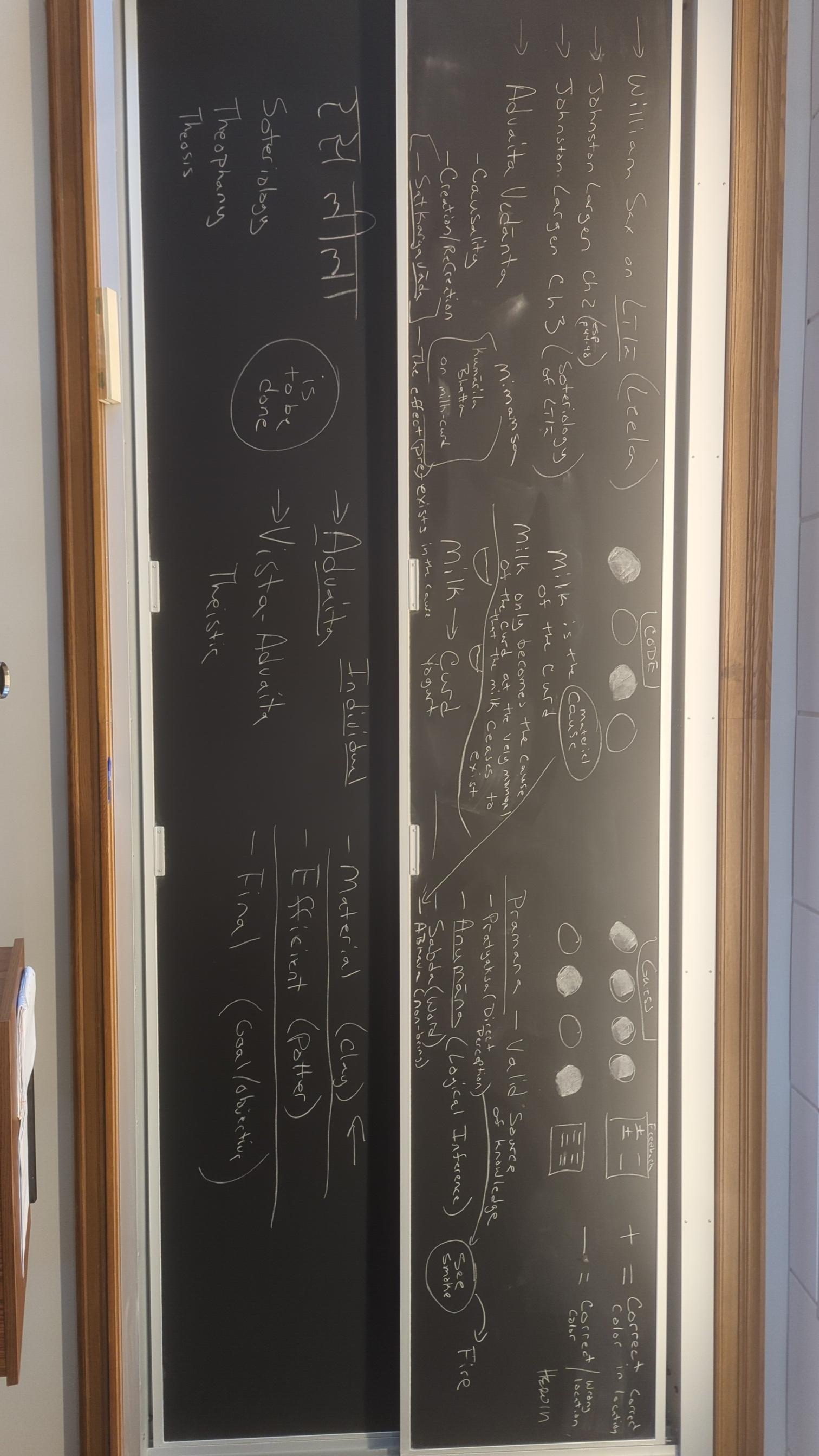
Brad: Yes, yes and no. Yes, basically yes. So let me talk about that now. So let me answer that question now. So, for the next podcast, I would like you to follow a little bit different format than normal. So the normal format is you got four people on your team, each person takes a turn leading the discussion, right? That's how we've been doing it. That's how we'll continue doing it. But today, but this one's going to be an exception. So this one, instead of doing that, I would like you to cover these four topics, and I would like everybody to cover all four of the topics. So take these four topics and divide them up, because they're, yeah, so I want you to kind of, we'll give you some time today in class so you can coordinate with one another and figure out how to divide it up a little bit. But I would like everybody to be prepared to cover part of each one of these.
Brad: So first, is the William Sax reading. I know it's only a few pages, but there's a lot in there. And, so I'd really like you to cover, you know, he, Sax gives lots and lots of different, interpretations or meanings of the word play, meanings of *līlā*. As it applies to, you know, dance and ritual and performance and like actual perform, you know, plays. So many different meanings, right? So I'd like you to try and cover all of those meanings in your podcast. So, I'm not looking for, I'm not looking for you to like, I'm not looking for a whole bunch of like original thought in this particular podcast or interpretations. I just want you to kind of talk about, make sure that you've got, make sure everybody understands *līlā*, with as much depth as possible, right? So, so cover the William Sax reading in some detail. And again, it doesn't necessarily take much longer than usual to do that. You know, just everybody kind of like go through some of them.
Brad: Then section two, the second topic would be the second chapter of Johnston Lørgen. So Johnston Lørgen, I, I, I deliberated at some length about whether or not to delete the first few pages of this reading. It's not terrible, but it's not, it's not, don't, don't focus on the first few chapters, the first, this whole what is Hinduism, all that kind of stuff. It, it kind of want to pull my, hair out sometimes when she says like, Hinduism doesn't exist, which is true, and then she goes on to talk about it like it does exist. It's like, but you just said it, anyway. Don't worry about the first few pages. Some of it should be review. But really focusing on like from the new mindset forward. And it might be, wouldn't be terrible if, if you have somebody in your team that had my class last semester, you could, you could lead that section where you're kind of talking about, *nirguṇa* and *saguṇa*, *cataphatic* and *apophatic* theology, which some of you talked about in your last podcast, which is great. So you can go back to that. But also we'll cover that after. And if you don't have somebody in your team that had me last semester, no problem. But really try to, you know, go through the life of Kṛṣṇa. So, you know, the birth and death and, life of Kṛṣṇa. We're really focused on Kṛṣṇa. We're not focused on Johnston Lørgen. We're focused on Kṛṣṇa, and we're just reading Johnston Lørgen as a way to learn about Kṛṣṇa, right? And, and focus especially on these two stories at the end of the chapter. So she has the story of the, the, Yaśodā looking into Kṛṣṇa's mouth and seeing the entire universe. We showed the video of that, the other day. So that's one of the stories. That's a super important story. And one of the, don't overlook the fact that he wipes her mind. Did I talk about that? That he causes her to forget that she's, that that he's God, right? Because she just wants him, he wants her to be his mom, right? He wants her to play that role, and he wants to play that role.
Brad: So, and the other one is the *Rāsa Līlā*. So the cowherders dancing with Kṛṣṇa. So another kind of play, dancing, etc. Then, chapter three of Johnston Lørgen is also really good. Kind of the key term there is soteriology. Soteriology. Anybody know what soteriology means?
It's fine. So it means the study of salvation, right? So, usually, usually translated as study of salvation. For our purposes, we've talked previously about *mokṣa*, right? *Mokṣa* is one of the, four aims, you know, aims of all people. So, *mokṣa*. *Mokṣa* means what?
Student 6: Release?
Brad: Hm?
Student 6: Release?
Brad: Peace? No, uh-uh.
Student 7: Liberation?
Brad: Liberation. Yeah. So *mokṣa* means liberation. And so that doesn't mean exactly the same thing as salvation, but they're, they're pretty close, yeah? So I think we can take them, as pretty close. So in what way? I I really like how Johnston Lørgen lays out this chapter. I think, yeah, I think it's really good. The whole chapter. And, yeah, like she says, so the title of the chapter is Kṛṣṇa and his followers, how he saves, right? So that's, on soteriology. Really the whole book is on soteriology. But so how does *līlā*, in what way is *līlā* salvific or, liberatory? So, you know, you can divide that chapter up however you want, but try and cover that. In as much detail.
Brad: And then, the last part, and this you don't have to spend as much time on, if you run out of time, if you run out of time and you don't get to this, but you have really good discussions on those, that's fine. But, but I think it would be really helpful to spend a little bit of time reviewing *Advaita Vedānta*. So it's not really anything new, in *Advaita Vedānta*, other than these two things, which I hope to, get to and teach you today. But we'll do those later in the class. So that's basically the, the plan for the podcast. So, yeah, good?
Student 6: Yeah, what? So, I understand everyone goes over every topic?
Brad: Yeah.
Student 6: It's not like we divide each topic?
Brad: So, I mean, I do want you to divide each topic, right? Because I don't want each one of you to try to go over all of chapter three. There'll be a lot of repetition, right? I'd rather you, take chapter three and say, hey, I'm going to take the first part, you take the second part, take the third part, right? Don't try to cover everything in there. Just, I would say probably a good way to do it would be, you know, just got these little section headings. So you could take, each one of you take a different section heading. Don't, again, you don't try to cover all of it, just, just try to cover as much as you can. The goal, keep the goal on *līlā*. The whole point of this unit is to make sure that everybody has a good understanding of *līlā*. And well, that is it. That is the point of the unit. So, good? Cool. Other questions? Yeah.
Student 7: Is there a specific reading for *Advaita Vedānta* that you want us to cover?
Brad: So, I would really like you for, for this one to, to try and think about it as a whole, right?
Student 7: No, like no reading, just more like the concept.
Brad: Yeah, yeah. So, you know, I mean, I think bringing in the, the, the four *mahāvākyas* in some way might be good, but, but not so much focused on the text as the idea of, non-duality. Yeah. Good? And again, that's not, that's not necessarily anything new. Just kind of want to make sure everybody has a good, you know, basic grasp on it. Hopefully you have a better grasp on it now than you did last podcast, although last podcast was pretty good, so. Good? Cool.
Brad: You might want to review the various kinds of causality. What are the various kinds of causality? Three kinds of causality?
Student 8: Material, efficient, and final?
Brad: Yeah. And so what does that mean? Material cause, so if we were to talk about clay, right? Clay is a material cause. What would be the, well, I kind of already wrote there, right? So then, in order for the clay to take the form of a pot, right? Then somebody has to shape it into the pot, right? So the, the clay is the material cause, the pot, well, on one hand, you could say the pot is the final cause, but more, more likely it's like you have some use for the pot, some function for the pot, right? So like I want to put flowers in it or something like that, right? So, so that would be the final cause, the goal or the objective. The efficient cause would be the potter, right?
Brad: So if we want to, so it'd be good to maybe reflect on *Advaita Vedānta*. A lot of you seem to have a pretty good grasp on the non-duality of material cause. Let me, you want to be careful with, prepositions in particular, when talking about *Advaita*. If you say that I am made from *Brahman*, that's not exactly right, right? Because the *mahāvākya* is I am *Brahman*, right? It's very different to say I am Brad versus I am made from Brad. Those are very different things, right? So it's not that I am made from Brad, it's I am Brad, right? I am *Brahman*, not I was made from *Brahman*. It's also not right to say that *Brahman* is inside of me. In the same way it's not right to say that Brad is inside of me. I am Brad, all of me, right? Every part of me. So, every part of me, is the material cause. But then we also have to get into the efficient and final, right? So in a, in a theistic tradition like *Viśiṣṭādvaita*, we're, we're studying both of these, right? I hope that this is becoming clear, right? So the last unit was on *Advaita Vedānta*. So non-dualism, and one of the key features of non-dualism, is it's non-theistic, right? Whereas *Viśiṣṭādvaita*, which we're studying now, is non-dualism plus God, right? So it's pretty significant difference, but I want you to understand both and how we can read the same scripture, the same passage in both of these different ways. Just to, yeah, just to be clear, when we get to the Bhagavad Gītā after the break, I'm going to ask you, you know, like, let's say one week we're studying chapter, chapter three, right? Then I want everybody to, and especially your group leaders, when you're group leader, pick a verse from the verse or passage, but usually a verse from that, from that chapter that we're talking about that day, and I want you to give a *Advaitan* reading and a *Viśiṣṭādvaitan* reading, right? So interpreting the same passage in two different ways, and not two random ways, but these particular ways, right? So, reading it, reading the same text with, in this case Kṛṣṇa, right? Kṛṣṇa is the dialogue partner. So one would be to look at Kṛṣṇa as God, right? As a deity, as a, as a God, which is very different than reading Kṛṣṇa as say, like the voice of moral conscience or like a psychological reading or something like that, right? So anyway, that's why I want to make sure that you have the distinctions between both of these. Play, *līlā*, is very much a part of both of these traditions. So even though I'm only introducing it here when we're talking about *Viśiṣṭādvaita*, we can read it into *Advaita* also. Anyway, I'm not expecting you to understand all that. I'm just kind of giving you a little foreshadowing of where we're going, right?
Brad: By the way, I said this to the other class the other day and then forgot to say it in here. But after the break, I don't want any, I know my normal thing is tablets are fine, but I don't want any screens at all in the room, after the break. So for the rest of the course, starting, next Tuesday, you just have paper, you know, notebooks fine or whatever. And the text. So, you do not have to purchase, a copy of the text. I will give you, a PDF of this one. It's actually a Google Doc, but I'll give you a Google Doc that has, this exact copy in it. And you can print that or whatever. If you would, I'm not going to print them for you. So I will give it to you, this weekend or something. I'll give it to you well in advance, and you can either print the whole thing. It's not this isn't even that long. But you can print the whole thing or you can purchase this. So this is, I will send you a email that has everything in it. But, I, I think that, especially since we're spending the rest of the semester on these two texts, it wouldn't be a bad idea for you to have it in your library. The Bhagavad Gītā is a text that, you know, it's not a bad thing for you to have on your shelf in your library, just period, right? Especially since we're doing so much reading of it. So, the two translations that I would recommend, and it's either or, not, you know, you don't have to do both. But the two that I would recommend, one is, this one by, Barbara Stoler Miller. This is, you know, super small, nice little, nice little volume. This one, brand new, costs 5.95 according to the back here, so it's not even that expensive, and you could get it used probably for a lot less than that. Or you can print off the PDF or print off the doc I'll give you. This, I'll say more about the translations and that kind of stuff when we get to it next, after the break. But this is a very nice poetic translation. So some benefits of it is she translates every word. There's no Sanskrit in here. It's all, so she translates words like *dharma* and *yoga*, you know, those sort of things. Which are words that a lot of other translators wouldn't translate, right? *Brahman* and *Ātman*. Well, *Ātman*, people usually translate as the self. But anyway, so she translates every word, and she does a really, really, really, really, really impressive job of capturing the poetic, the poet, the poeticism, the poetics of the text. She breaks it into four *pādas* that have like not exactly the same number of syllables as the Sanskrit, but she's, she's really, really impressive how she was able to capture the poetic, Gītā means song, and so it's, you know, she captures that sort of flavor of the song. The other one that I very highly recommend, and again, it's either or really. Is, this one by Graham Schweig and, I will put this in an email too, but it's the Bhagavad Gītā by Graham Schweig. If you are interested in yoga, then this would be a great one to have. And it's very, again, he, he, it's very good translation. He does a good job of capturing the poeticism. He doesn't translate words like yoga usually. So he, I think very intentionally wants to keep, he wants to highlight how often the word yoga is in there. He's an expert on yoga, so he's a very yogic reader. So, and he also has some great essays in the back on yoga and on the Gītā. And he also gives you, the entire text in Devanāgarī and, Sanskrit in transliterated Sanskrit. So you can read it in there and it's, he's got great notes. It's a really good, it's a really good, translation. So this one, this one's 16 bucks for a new copy. You can probably not that hard to get used copies. I do not have a PDF or anything like that of this copy. I've got lots of other translations actually too. As far as the, so that's for the Gītā. So you could have, you could either print out the copy I'll give you, which is the Barbara Stoler Miller, or you could purchase one of these two, up to you. On the, on the Gospel of John side, I don't know. Part of me thinks like if you, probably a lot of you already have a Bible, so you could, you could use that. My preference, especially if you don't, my preference would be the, the Oxford, annotated, yeah, translation of the, I mean, you can't really get just the Gospel of John, it's like a whole, the whole Bible. But you can usually get used copies of that, like almost anywhere, especially at BC, I think you'll be able to find used copies of that or probably in the library very easily. That's NRSV. This is just kind of the gold standard as far as academic study in pretty much any classroom where you study the Bible, they'll use that translation. I do have PDF of that. It's, you know, torrent download copy, but whatever. I've got, so I'll share that with you, or you can get your own printed copy, or you if you already have a copy, then that's fine too. Cool? But no screens after the, after the break. Yeah.
Student 7: So should we bring both to class or just the one we're...?
Brad: We'll do, I mean, it wouldn't be a bad idea to bring both to class, but definitely the Gītā on Tuesday and Gospel on Thursday. That'll be our normal thing. Yep. And I'll also give you, assignments for team for discussion leader. So we'll start that after the break too. And we'll pretty much just be in circle, after the break. I'll have some lectures here and there, but they'll, I'll try to keep them short. Good? Cool? Right.
Brad: So, let's shift gears. I do have a little bit of a lecture that I want to try and squeeze in at the end. But the best way to, learn about *līlā* or talk about *līlā* is to just play, right? Sometimes it's better to just play instead of talking about playing. So we're going to play a game. You've got some crayons hanging around. I'm going to pass out. Has anybody ever played a game called Mastermind?
*(Some students respond)*
Brad: Couple? Yeah, there's only a couple folks. Anybody played like, Wordle? Okay. So, they're, Wordle kind of is inspired by Mastermind. This is, this was just, this really just, this really just Mastermind. So, I'm going to hand out these sheets, Chroma Quest, Chroma Code Quest. Basically, and I'll hand out these sheets. Basically, you've got, it's, you know, 1v1. We'll do 1v1. So you partner up with somebody. If there's an odd number, I'm down to play. But, so, whoever's, so I want you to both take a code sheet and both a guessing sheet, and you play two games at once, right? So, we'll have, are y'all playing each other? So, so Jack would take and write down a code. I've, you know, fold this side over so you can cover it up, right? So it's a hidden code, secret code. So you just make a code, just use the top one, you just make a code, and then the other person's trying to guess the code. That's it, right? And then you're trying to guess, you're trying to guess the code before the other person, trying to break the other person's code before they break yours, right? And then alternate turns. So you have to give feedback. So let's say this is the code. I think maybe for starters, let's just use one color and blank. And then if, if you want to make it harder, you can go more colors, right? So in this case, we'll just have, you know, on off, binary, so color, blank. So this is the code, right? So the code writer will write the code. And then the person will guess. So let's say this is the code, and then the person guesses. Then the code maker has to give feedback to the code breaker, right? And the feedback, is either a plus or a minus or nothing. Nothing is nothing, okay? Plus means that you've got the correct color in the correct location. And we're treating blanks as a color, right? So blank is a color, and then whatever. So plus means the correct color in the correct location. A dash means the correct color in the wrong location. Now here, I did the previous professor put heroin on the board. I didn't put heroin on the board. I try not to touch heroin. That's why I just left the heroin on the board. But, so, plus or minus or a blank. Now, this is important. I've taught this to a lot of different classes and people that have never played it before get confused about this. The feedback is non, there's no location factor in the feedback, right? So when you give the feedback, the the location of your feedback has no bearing whatsoever on, right? So location, that's why I put them in a box like this so that there's not, you know, any confusion about that. So these dashes don't the spaces don't correspond to the spaces. So if somebody guessed four, you know, full circles, then you'd give two plus signs, right? So a plus sign for this one, because it's the correct color, correct location, a plus sign for this one, correct color, correct location. Right? And then if they guess this one, then you'd give four dashes, right? Because that's the correct color, but wrong location, right? Correct, color, but wrong location. You get the idea, right? Any questions? Yeah.
Student 9: What happens if it's the wrong color but the right location?
Brad: Then they just don't get a, then just blank. You get nothing. Yep. Cool? Alright. So you got, crayons.
*[small group discussion]*
Brad: Did you like it? Everybody understand the game? Yeah? Okay. I've got, I've got a little lecture. I got a little lecture. Okay. Let's hop in, let's hop into lecture time. Okay. So, this, this lecture just, I just need to squeeze it in. It's just, you know, it's just something I got to cover. Some of it, I, some of it I feel like I introduced the *pramāṇas* before, but, but either way, I'm going to go over them again. So, in the *Ṣaḍdarśana*, the six perspectives, right? There are, there are, all of them, identify what are called *pramāṇas*. A *pramāṇa*, *pramāṇa* just is a word that means a valid source of knowledge, right? So, a valid source of knowledge. And, different, different *darśanas*, different schools of, of, orthodox teaching have different lists and they think about them a little bit differently, they interpret them differently. But some things are the same. The top three are 100% the same in all six of them. And they're the most important. So let me go over them really quickly. So, valid sources of knowledge.
Brad: The most reliable valid source of knowledge is *pratyakṣa*, just direct perception, right? *Prati* means right in front of, and *akṣa* means eyes, right? So right before your eyes. So, if you see something, right? If Cameron sees something, no amount of convincing, I mean, it's going to be pretty hard to convince Cameron that he doesn't see what he sees, right? So something's right in front of your eyes, it's pretty reliable, valid source of knowledge, right? It's not infallible, it's not 100%. Sometimes, you know, if you, depending on how much heroin you've had or something, things might not appear appropriate, you know, exactly right, or if you're tired or sleepy or stoned or something like that, then, you know, maybe you're, maybe you come across a rope on the ground, but because it's dark and you're tired and things and you don't see it very clearly, then you think it's a snake, right? And so you get scared or whatever. But and in fact, in actuality, it's just a rope. And usually that's not, so the *Mīmāṃsakas* and others would say, well, that's not really *pratyakṣa*, it's like bad, like you're not seeing it clearly, right? So if, if you had a flashlight and you could see clearly, then it would be reliable, right? So *pratyakṣa*, the most, and even though I'm using that example of vision, could be any of your five senses, right? Seeing, hearing, tasting, touching, smelling, etc. So, *pratyakṣa* is the most reliable of the *pramāṇas*, and it's just direct perception. And then, next is *anumāna*. So *anu* means after, and *māna* means thinking. So it's the thinking that comes after, thinking that comes after what? Direct perception, right? So you see something, and then, so *anumāna* is usually translated as logical inference. So you see something and then you infer something else, right? Stock example would be, if I see smoke, then smoke is what's appearing before my eyes, right? So I don't need *anumāna* to know that there's smoke there. I see the smoke, but then I can infer what?
*(Students murmur)*
Brad: I can infer fire, right? So if I understand the logical connection between smoke and fire, and if I see smoke, then I can infer fire. Yep.
Student 10: You say these are ranked? Yes. Like, so direct perception is the most valid source of knowledge. Non-existence is the least valid source?
Brad: So, yes and no. So they are the most reliable and they're the easiest. So they are, I think they're the most reliable. So they are in order of most reliable. But the other difference is they, different *pramāṇas* reveal different kinds of knowledge. So, so they're different in, in terms of the kinds of knowledge that they reveal. So *anumāna* is really helping you to see connections between things, co-occurrence. In the case of, fire and smoke, you know that fire and smoke are different things, but you know that they occur together. So if you know that they occur together, then you can infer one from the other. But yeah, basically, they, they are in order of reliability. Although, yeah, people that, subscribe to them would say, well, that's not exactly true. So, I'm some, yeah. *Śabda*. *Śabda* means word, and in this case, what we really mean is the Veda, right? So all of the *Ṣaḍdarśana*, that's what makes them orthodox systems of, of Hindu thought is they all agree that the Veda is, a reliable, valid source of knowledge. Now, just because the Veda is a valid source of knowledge, doesn't mean that I'm going to read and interpret it right. Right? So, so the, just because I read it doesn't mean that I'm going to understand what it's trying to teach. I may read it and get the wrong idea. I may read it and misinterpret, right? That doesn't mean that the, the Veda is fallible, but it means that I, as a, as a reader of the Veda, I'm definitely fallible, right? So, it doesn't necessarily mean that it's, less reliable than *pratyakṣa*. That would be a better way to say it. So it's not that it's less reliable than *pratyakṣa*, it's just there's more places for it to go wrong, right? The main place that it would go wrong is in order to understand the scriptures, I have to interpret the scriptures, right? And interpretation could, I mean, interpretation is going to vary, right? Yeah, you got it, right? Or, I mean, there's other reasons, it could be, you know, like take *anumāna*, right? Like you could, if you could see something, I don't know, like a die, right? So you see, you see three, right? And therefore you can infer, what's on the other side, right? What's on the other side?
*(Students murmur, guess 5, 4)*
Brad: No gamblers in here at all, huh? You don't know statistics of...
Student 11: online spinning casinos, not actual dice.
Brad: Okay. Well, opposite sides of a six-sided die total seven.
*(Students react with understanding)*
Brad: Four, right? Yeah. So, right? So then you see three, and then you infer four from the other side, right? Yeah? So then I could, right? So then I could show you. Oh, that's not a three, is it? So, right? So there's various reasons that it could be fallible.
Student 12: That's not a real die.
Brad: Well, it's a three, it's a three-sided, it only has... It's a trick die, right? So that's the point then, right? Because sometimes it's not so much that the inference is fallible, but, you know, there could be things could be misleading. Cool?
Brad: Let me get to *abhāva*, because *abhāva*, the whole point in telling you these is mostly so I can tell you about *abhāva*. So, we've talked before about *Mīmāṃsā*, and so, I want to talk about this one, this one *Mīmāṃsaka*. This one *Mīmāṃsaka*, this one *Mīmāṃsā* theologian, his name is Kumārila Bhaṭṭa. And, I read his, his explanation of, all the *pramāṇas*, but especially *abhāva*, and it was super dope. In fact, I have a former BC, student, she's now a partner at Ernst & Young, so, you know, it's not no slouch. And, she told me when she, you know, contacted me to say that she got the partnership and all that kind of stuff. She was like, by the way, when I was doing my, interview with E&Y, I told them, I talked about *abhāva*. And I was like, well, that's kind of crazy. That's weird. So anyway, it's worth, it's super interesting and poignant, and if I do it right, mind-blowing. So, *abhāva*. *Abhāva*, the word means non-existence, right? *A* meaning not, and *bhāva* meaning being, non-being, non-existence. So then, there's a lot of debate among the different six systems. Not so many of them accept *abhāva* as a valid source of knowledge, and the ones that reject it think that the people that accept it are crazy, right? What do you mean? How can non-existence be a valid source of knowledge? How can you learn anything from non-existence? And the most of them that reject it say, actually, you're just talking about logic, right? You're just using logic in a different way and then calling it something else. But Kumārila Bhaṭṭa insists that it's, something, that it's something unique, and not only that it's, a different form of valid knowledge, but that it reveals a different kind of knowledge than the other sources. So it reveals something that can't be known from the other valid sources of knowledge. By the way, we did see this before, for the *Mīmāṃsakas*, right? For the *Mīmāṃsakas*, the Veda is a valid source of knowledge, and it reveals something that can't be known from any other valid source of knowledge, namely, what is to be done, right? So you can't, so, *pratyakṣa*, direct perception, that tells you what is there, right? That's, it is there. You see it, you hear it, you taste it, you smell it, it's there, right? So that tells you, that reveals, that's a valid source of knowledge of what exists. But *śabda* is a valid source of knowledge of what ought to be done, right? So ethics. So it tells you what is to be done, what is to be brought into being. So it is kind of the present, right? Something that is, but something that is to be done. So some sort of obligation, some sort of moral, ethical obligation. So this is the thing that is to be done. So you get the idea, each one of these reveals a different kind of knowledge. So they reveal knowledge in different ways, but also reveal different kinds of knowledge. So what we want to focus on now is the kind of knowledge that *abhāva* reveals to us according to Kumārila Bhaṭṭa.
Brad: Another thing that I told you before is that *Mīmāṃsā* and *Vedānta* are sister schools, right? They're two schools that they're pair schools. And so they, the *Vedāntins* are, you know, really kind of graduates of *Mīmāṃsā*, right? So they grows out of the school. And so part of what I want to get you to understand is *satkāryavāda*, but in order to do that, this is a, *Mīmāṃsā*, this is a *Advaitan Vedāntin* thing. Sorry, I'm just, let me get, let me just explain this. Just talking to myself. So, the example that Kumārila Bhaṭṭa uses is milk and curd. This is what she used in her, in her interview. So, let's say, I were to bring a bowl of buttercups milk, and lay it there on the windowsill right there. Just like open bowl of milk. I think that the department and the janitors wouldn't be thrilled if I did that, so I won't do that. But, but let's say I left it there, right? Just a bowl of milk. If we come back on Thursday, it wouldn't be a bowl of milk anymore, it'd be what?
Student 13: Spoiled?
Brad: Could be spoiled. Anybody make yogurt? You know how to make yogurt? No? So it'd be yogurt. It'd be, I mean, curd, right? So milk turns into curd, right? Curdled milk, yogurt. So to make, to make yogurt, it's really all you do is you leave milk out. Although it could get, you know, the yogurt that you get in the stores is like live bacterial cultures. You see that on the, on the label, right? So it's not all bacterial cultures that lead to the kind of yogurt that we want to make. But nevertheless, that's what it is, right? The, bacterial cultures eat the, eat the, lactose, eat the milk, and then turn it into yogurt, right? So the point is, milk, if you just leave it out, there's bacteria in the air. So if you just leave the milk out, it will turn into curd period, right? So Kumārila Bhaṭṭa says, all right, so you, so you have a bowl of milk, right? And you look at the bowl of milk, well, that's *pratyakṣa*, right? I see the milk. It's no *abhāva* there. I just I look and I see the milk. And then I come back later, and I look and I see the the curd that's there, right? And I see the non-existence of the milk. So, I see the milk, that's *pratyakṣa*. I see the curd, that's *pratyakṣa*. The *abhāva* is when I come and I look at the curd, I see the curd, that's *pratyakṣa*, but I also see the non-existence of the milk. And all those other philosophers are like, you can't see non-existence, that's weird, right? That's not, that's not a valid source of knowledge. But Kumārila Bhaṭṭa explains it like this. What, so the different *pramāṇas* reveal different kinds of knowledge, and the kind of knowledge that *abhāva* reveals to us is, the knowledge of causality. Right? So you can't, causality isn't something you can see. Causality is something that you can infer. So those other philosophers will say, well, that's just inference, so, you know, it's not really a valid source of knowledge separate. Yeah.
Student 14: Is that kind of like when Moses talked about negative theology where it's like you know what God is through what he's not?
Brad: Kind of. It's this is a little bit different. This is a little bit different, but it's definitely related. Definitely related. So when you're, when you look, you see the curd, but you also see the non-existence of the milk. So it's a little bit of, you have to look and see the milk first, and then you come back later, or you stay there super diligent and you just stand there for a few days or whatever. And you see right before your eyes, right? The milk has become the curd.
Brad: So, what Kumārila Bhaṭṭa points out is that when I see the curd and I also see the non-existence of the milk, then I am able to know, that milk is the cause of the curd. That seems pretty simple, right? So, I, *abhāva* helps me to understand that milk is the cause of the curd, right? Obviously. But here's the, here's the like, mic drop, mind-blowing, oh my goodness, everything looks different now that I understand this fact. Here's the, yeah, here's that thing. The milk only becomes the cause of the curd at the moment that the milk ceases to exist. This is an important thing. The milk only becomes the cause of the curd at the moment that the milk no longer exists. Follow all that? No? The milk... Okay. When, when the milk is the milk, it's not the cause of the curd, because it's just milk. Right? It only becomes the cause of the curd at the moment that it's no longer milk, that no longer it's non-existent, at the moment that it's non-existent. Yeah.
Student 15: Would it be similar to like a caterpillar is the cause for the butterfly, right when it ceases to exist? Like the butterfly doesn't happen...
Brad: Yep, that works. Absolutely. That works. So the, the caterpillar is a caterpillar until it's no longer a caterpillar. And when it stops being a caterpillar, at that moment it's a butterfly, right? So the but, so the caterpillar only becomes the cause of the butterfly at the moment that the caterpillar no longer exists. That's a good example. Yep.
Student 16: What is the importance of like the non-existence aspect of this then as opposed to like *anumāna* where it's like...
Brad: Sure. Yeah. Did you have a question?
Student 17: Yeah, not his question's better.
Brad: Yeah, no, I'm... Okay. So, the, this is significant for a lot of reasons, right? But in the, in the two minutes I have left, let me give you one big one, right? So if we are talking about creator, right? So, as I've emphasized all semester, all of the six systems agree that, this idea that something comes from nothing is bullshit, right? Something can't come from nothing. Only something can only come from something, right? So, if there is such thing as a creator, then the only way for the creator to become creation... Now you're getting it. Is for the creator to cease to exist, right? So the creator only becomes the creator at the moment that the creator ceases to exist because now it has become the creation, right? That's just one of the many reasons that this is... Okay. That's enough. So, as I said before, right? I think I said this before. It's wrong to say that I come from *Brahman*. I am *Brahman*, right? I don't come from *Brahman*. So that doesn't mean that *Brahman* ceased to exist, it means that *Brahman* is now me, right? *Brahman* is me and is in, in this Brad form and then this Jack form and then this Matt form and then this Justin form, right? So, I'm out of time.
Brad: Good. Hopefully, hopefully that, hopefully that landed there. Some work. See you Thursday.