 ```html
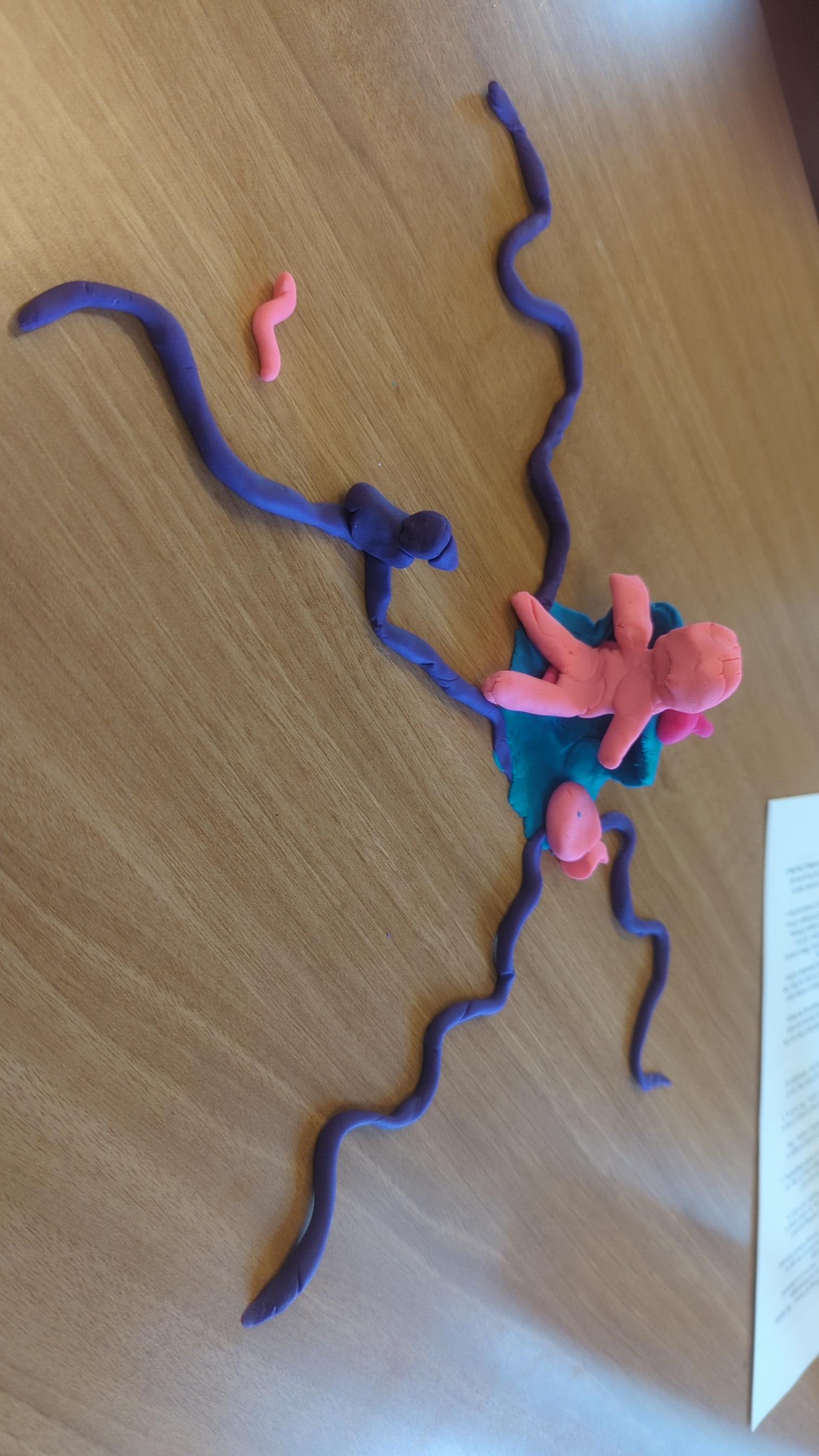
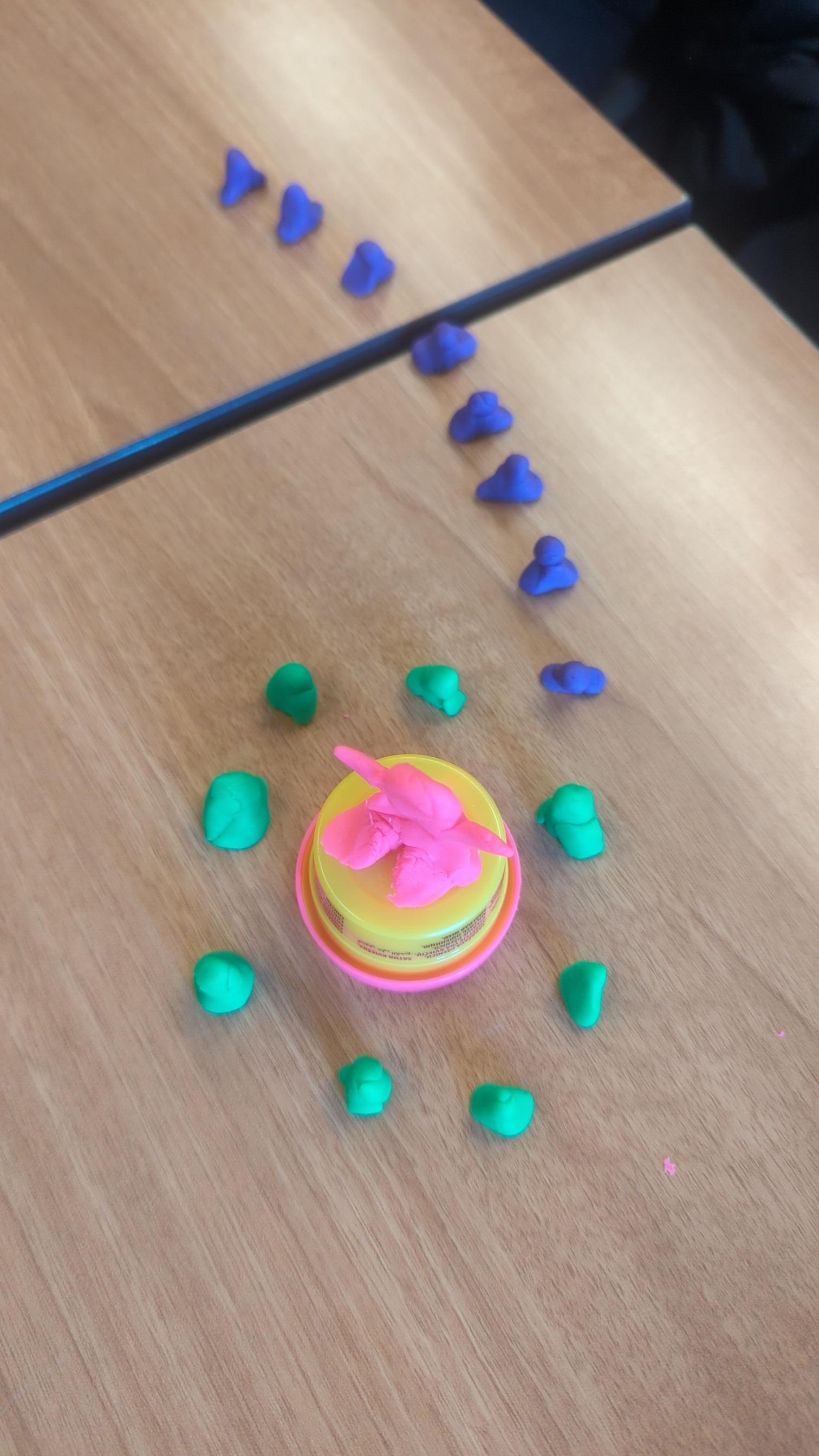
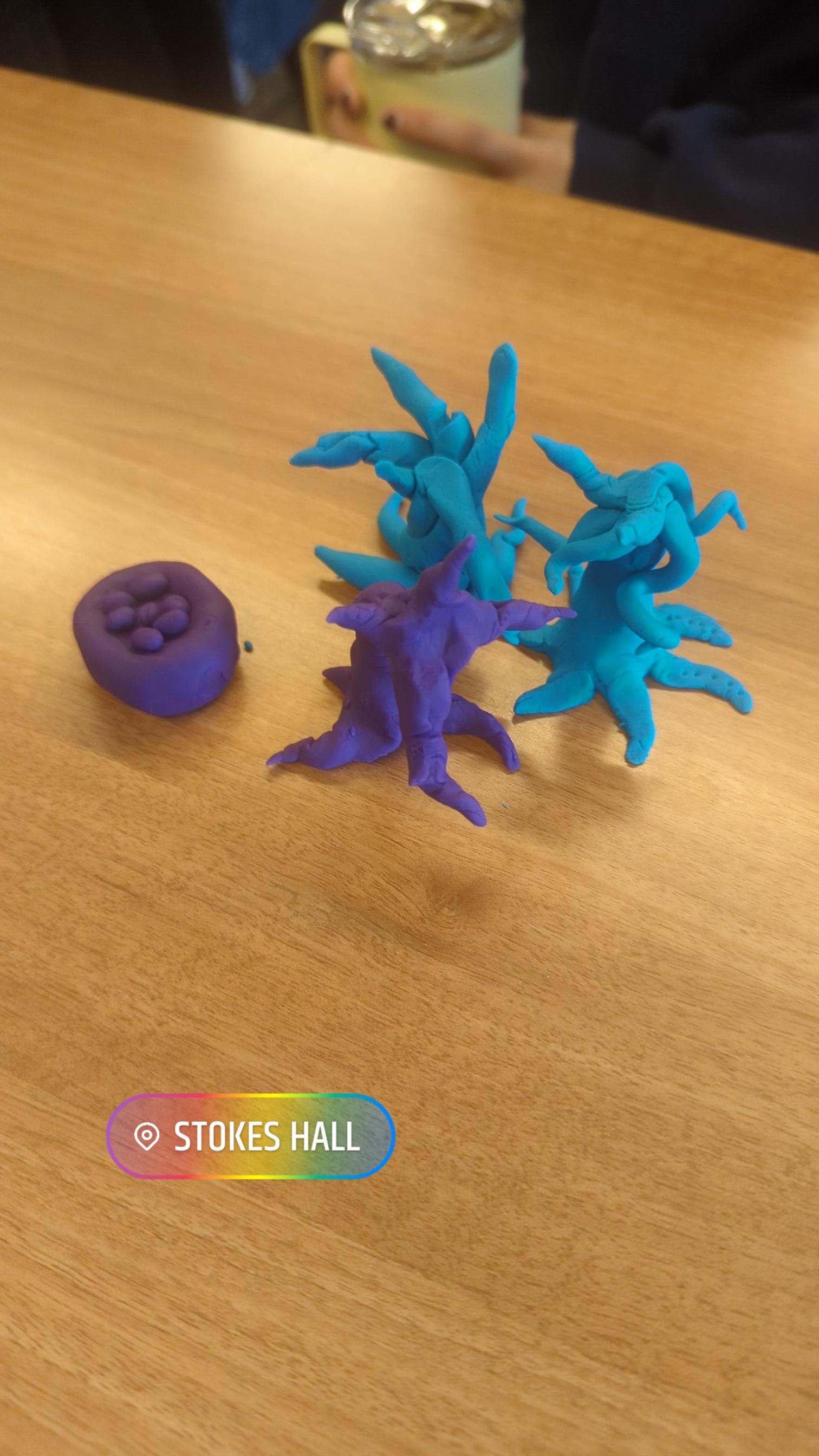
This class session focused on Advaita Vedānta, one of the six orthodox schools (Ṣaḍ Darśana) of Hindu philosophy, emphasizing its core principle of non-duality (Advaita). Brad reviewed the concept and the first Mahāvākya ("Great Saying"), Aham Brahmāsmi ("I am Brahman"), from the Bṛhadāraṇyaka Upaniṣad. The main focus shifted to the second Mahāvākya, Tat Tvam Asi ("Thou art That" or "You are That"), from the Chāndogya Upaniṣad. Students engaged in small group discussions, using Play-Doh to model various analogies presented in sections 8 through 16 of the text, which illustrate the relationship between the individual self (Ātman) and the ultimate reality (Brahman). Each group presented their understanding of a specific section (rivers merging into the ocean, the living tree, the Banyan seed's essence, salt dissolving in water, the blindfolded man needing a guide, the process of dying, and the ordeal by axe). Brad also introduced the third Mahāvākya, Prajñānam Brahma ("Consciousness is Brahman") from the Aitareya Upaniṣad, and previewed the fourth, Ayam Ātmā Brahma ("This Self is Brahman"), along with the upcoming reading of the Māṇḍūkya Upaniṣad. The importance of reading texts comparatively and harmoniously, drawing parallels to Mīmāṁsā principles, was also highlighted.
Brad: Howdy y'all. How's it going? Good. Great. Let's take a minute. Yeah?
Brad: Put everything outside, leave everything outside.
Brad: Just bring yourself into the moment.
Brad: Let's all take a breath together. Go ahead and breathe in.
Brad: And out.
Brad: Sorry about Thursday. We got another snowstorm coming in this Thursday, but I should be able to I should be able to make it here.
Brad: Just get up early. Did y'all get some snow? You got some snow on Thursday? A little bit? How much did you get?
Brad: Just a little bit? I mean, I guess I can see it, huh? Cool. I've got a couple of handouts for you. As I hand them out, I'd like you to get into your teams, organize into teams where you can kind of see each other. We don't need to be in a circle. We could do kind of like a relative circle-ish, but like a U I I want you to be in your teams primarily. So, most important thing is that you're with your teams. And then at the end, we'll stay in teams, but we'll kind of chat as a class. So, you get the idea? So, like mostly in teams, but also able to kind of see each other later. Cool. So go ahead and get into your teams and I'll pass these handouts.
[Small group discussion period begins as students organize]
Brad: I think you want to be able to see each other a little bit more. But let me just set set everything up a little bit. So, we're continuing our study of Vedānta.
Brad: Yeah, so, Vedānta. Vedānta is one of the Ṣaḍ Darśana, right? One of the six perspectives. And we're focused in particular on, at least right now, on Advaita Vedānta. And Advaita means?
Brad: Tushar?
Student 1: No double or no duality?
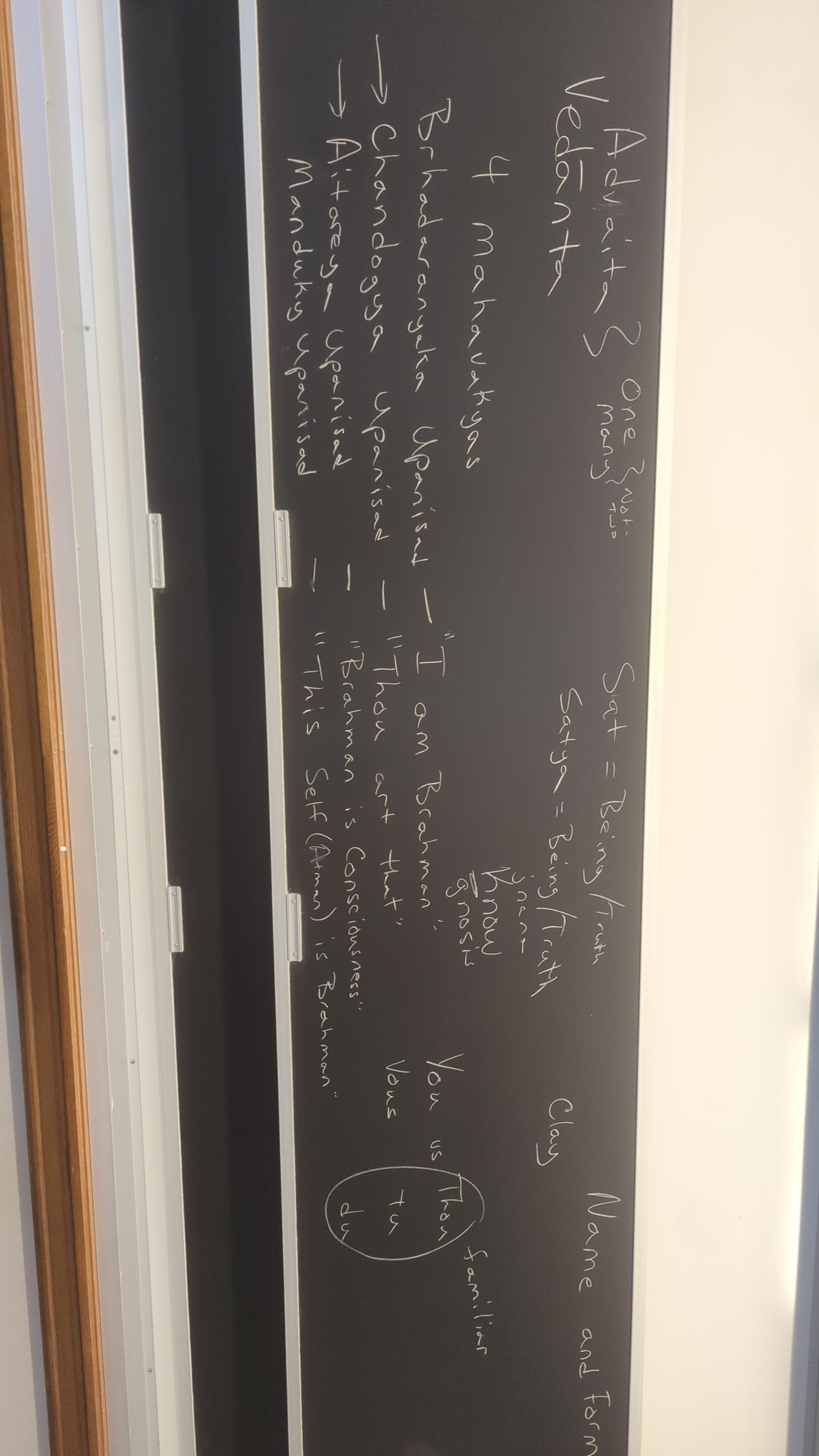
Brad: Yeah, non-duality, not two. Literally not two, non-dual. So yeah, that's right. Not two, non-dual. And so obviously, I think obviously, the key to Vedānta is understanding what what that not two means, right? What is it that what does it mean? And last week, last Tuesday, we looked at the first of four Mahāvākyas.
Brad: And the first that we looked at at least was from the Bṛhadāraṇyaka Upaniṣad.
Brad: Which is, I mean, it's definitely Upaniṣad, but it's also an Āraṇyaka. So, kind of bridging that gap. And the Mahā Mahāvākya, what was the Mahāvākya from that?
Brad: What does Mahāvākya mean?
Student 2: Yeah, great sentence.
Brad: So, great sentence, great utterance, great saying, whatever. Yep.
Student 3: I am Brahman.
Brad: Uh-huh. Yeah, that's right. Aham Brahmāsmi. I am Brahman.
Brad: And it began with that, right? In the beginning was this one person, that one person said I. And then when any of us say I, it's pointing to that same, that same person that was in the beginning and always, always is, always is.
Brad: Then for Thursday, which we're really looking at today, obviously. Was from the Chāndogya Upaniṣad.
Brad: Anybody identify the Mahāvākya in there?
Brad: Repeated over and over again.
Brad: No. Uh, that's right. Thou art That. That's how it's usually translated. In this translation that I gave you, it's you are that. Tat Tvam Asi.
Brad: You see it in pretty much the last verse in every section from section eight. Yeah, look there, section 8 verse seven.
Brad: That which is the finest essence, this whole world has that as its soul or Ātman. That is the truth, that is the self, Ātman. And then there's the line, you are that, Śvetaketu. It's usually translated as thou. What's the difference between you and thou in English? What does thou mean?
Brad: What's the difference between thou and you?
Brad: Yeah.
Student 4: Anybody? Not just someone specific?
Brad: Which one? You is anybody? Yeah, so, so thou is thou is less common. So thou you use not just with anybody, but more specifically with... The corollaries in French would be vous and tu. Or in German, du and Sie? Not ihr is there, right? I forget. But the thou is familiar, right? So, this is something, this is only used, you know, family or familiar. So it's more informal, more, more intimate, more familiar.
Brad: And here, of course, it's between a father and a son, right? So the father is using this to the son.
Brad: Then today, we're also looking at the third one, which comes from the Aitareya Upaniṣad.
Brad: And the Mahāvākya there, this is on the handout.
Brad: If you go to the back of your handout, not the back page, but the penultimate page there.
Brad: So you've got the Aitareya Upaniṣad, chapter three. And the Mahāvākya is there in verse three, the last sentence. Brahman is consciousness. Prajñānam Brahma.
Brad: We'll come back to look at that more closely towards the end of the class.
Brad: And then for this Thursday,
Brad: I gave you on this other sheet. So, this we're not going to look at today. This we'll look at Thursday. But I would ask you to read it between now and Thursday. And you'll notice it's just two pages. I mean, it's two translations of the Upaniṣad. This, by the way, is the entire Upaniṣad. This is not just a section of it. This is the whole thing. That's why I chose to wrote my my dissertation about it because it's 12 verses, so, you know, short. So this is my translation on one side, and then chat GPT four translation on the other side. And so anyway, that we'll look at on Thursday. And the Mahāvākya there is Ayam Ātmā Brahma. This self, Ātman, is Brahman.
Brad: So, today we're today we're mostly focusing on this one (Tat Tvam Asi), but we got to cover this one (Aham Brahmāsmi) too. So you've got podcast number two due this Sunday. And basically I want each person on your team to choose one of these and talk about it in in context. Yeah, just talk about it in context, right? So, there's also a ton to talk about from Ram Bachan's lecture. A lot in there, a lot of really good, a lot of great discourse about the relationship between Advaita Vedānta and quantum physics, among other, you know, our understanding of physics and consciousness. So anyway, enough prelude. Any any questions?
Brad: Okay. Sure? Good? All right.
Brad: Well what I'd like you to do now is spend a good chunk of time in your teams. Maybe you can
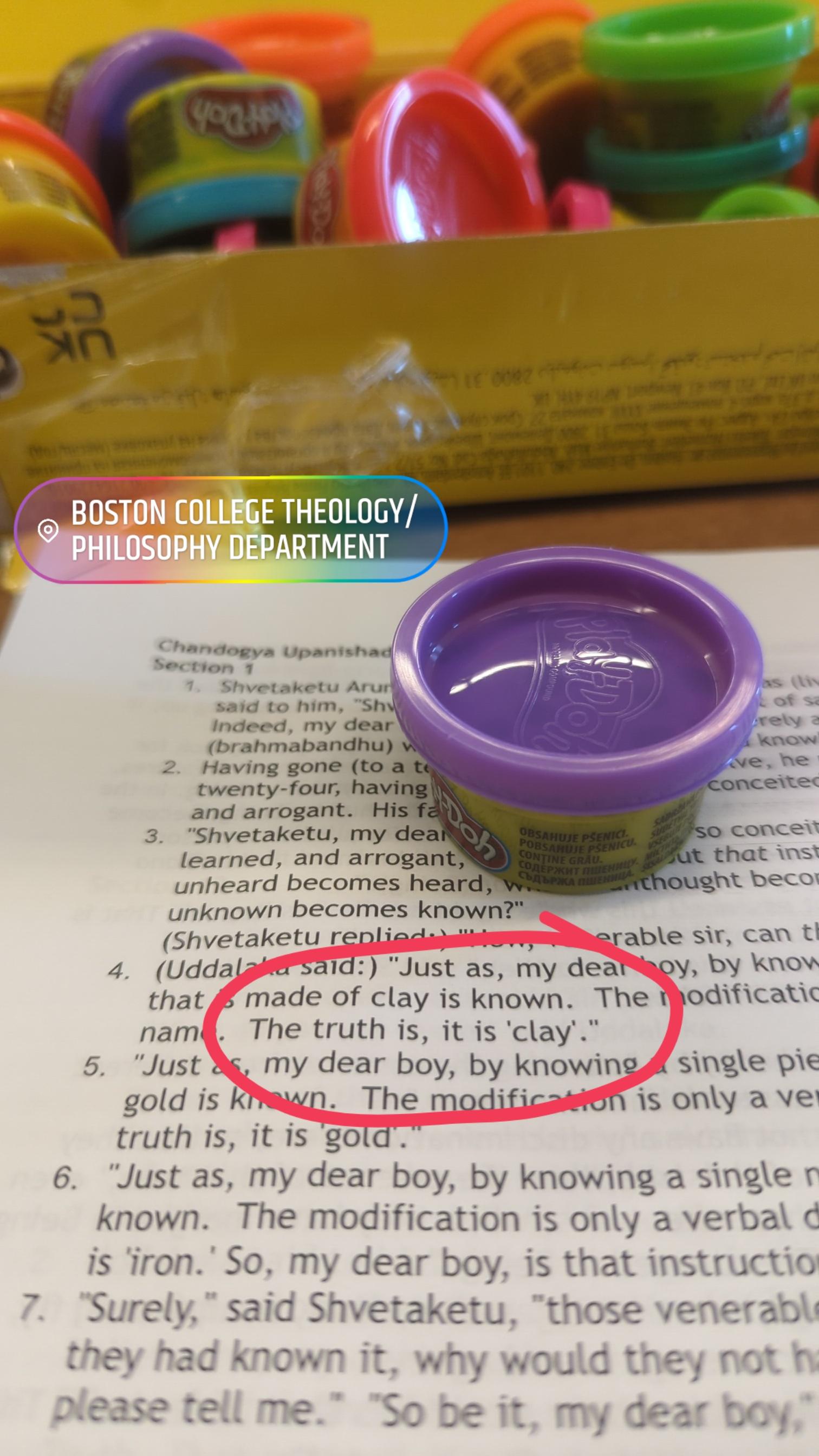
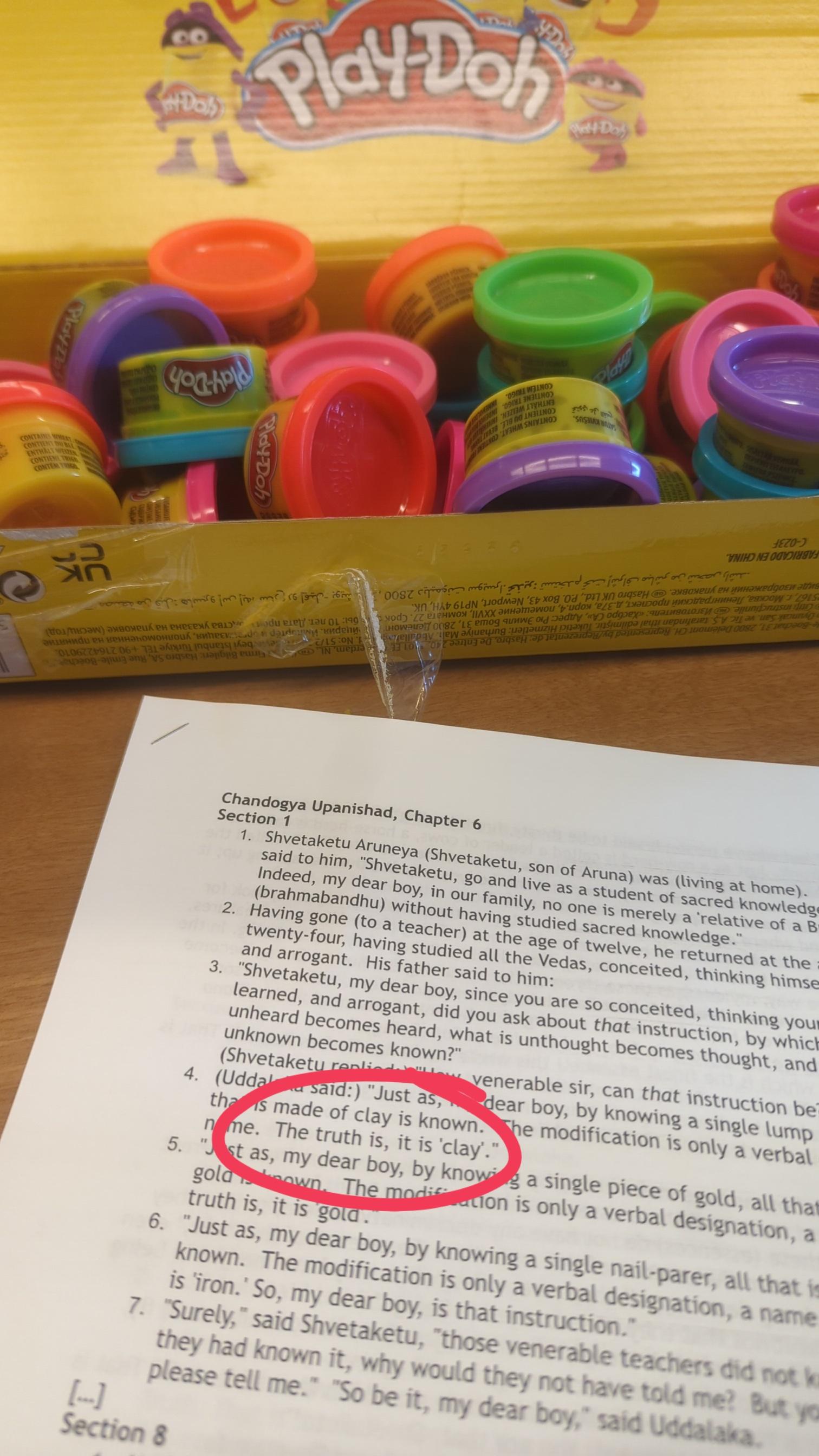
Brad: Maybe you can, as a team, we're going to take a, we're going to take a big chunk of time. This isn't just going to be like a five- minute thing. This will be a big chunk of time. I'd like you to really narrow hone in on one of these sections. It's kind of up to your team to decide which one. So anything between section 8 and section 16. So, you could decide more than one. But I think probably the best thing to do is while you're having a conversation about it, go ahead and take some Play-Doh.
Brad: And I don't know, we'll see what you can come up with, huh? I don't know, I'll just put I don't know how to give you color. I'll just put them around.
[Small group discussion period with Play-Doh modeling]
Brad: So?
Student 5: Is there any yellow Play-Doh?
Brad: Have you been changed your mind if she wants to?
Student 5: Yeah.
Brad: There's not. There are other colors though.
[Small group discussion continues]
Student 6: Brad?
Brad: What's up?
Student 6: What's the nyagrodha?
Brad: So, Ramachan talked about it. Ramachan described it as a Banyan tree.
Student 6: Okay.
Brad: So, yeah, it's a particular kind of tree. I think we can take it as a Banyan tree. Do you know what a Banyan tree is?
Student 7: How do you spell Banyan?
Brad: Uh, maybe I'll pull up a picture of a Banyan tree. B a n y a n.
Brad: So this is a Banyan tree. The Banyan tree that it grows up and then the branches come down and then it'll replant, you know, so it can like the biggest one is like hundreds of acres in size because it just, you know, keeps going. Anyway, sorry, didn't mean to interrupt.
[Small group discussion continues]
Brad: Patrick, keep doing anything?
Student 9: Yeah.
Brad: That's the spirit.
Student 9: Gets him just two for two today. I don't know.
Brad: Yeah.
[Small group discussion continues]
Brad: Okay. So, last year, last year we had a contest to see who made the best, you know, like sculpture sculptures. The reason I didn't mention it today is because I don't really like being the judge. I don't like judging. So, if anybody can, you know, you can come up with a system for like, you can't judge your own team, but you can't vote for your own team, but you can vote for another team and see who wins. Just throwing that out there as a suggestion. Or we could just do the the top three winners, you know, get posted on my Snapchat story or something like that.
Student 8: After the father son snow day duo does...
Brad: Oh yeah, that was good. I was going to play and I was going to get online during class just see if anybody wanted to pop on, but my my the PlayStation network was down. Oh man. Just Yeah. Four or five inches. On Thursday. We've gotten a couple more since then. How's the calfling by the way? Good. So Dandy decided they couldn't keep her locked up anymore. So let Dandy out and put a nose ring on her so she wouldn't nurse, but she hacked it. So, yeah, she's super smart. She knew how to hack a nose ring. She would like get it, she would figure out that she could go up. A nose ring is like, you know, this thing like spikes just basically make it uncomfortable. Actually, so she can't really get to the teeth to to nurse. And she figured out how to like go up against something and like push it up so that it was like all the way up, you know, on her nose so that she could nurse. She's like wicked smart, yeah. Yeah. And then she also figured out how to get it off, so it's not even on her anymore. Anyway, yeah. Didn't mean to interrupt the conversation again. Keep going.
[Small group discussion continues]
Brad: Okay, let's try to wrap it up.
Brad: Did anybody choose section eight?
Brad: No? It's okay. Let's look, let's look at section eight together. So, yeah, I'm just want to point out a few things. We're not really going to dive into them now, but but I want you to notice some connections. I mean, a big important an enormously important takeaway from this unit of the course, from this very short unit, two weeks, you know, three classes really, because we missed Thursday. Is to I want you to start reading across the text, reading the texts in connection with each other. Start seeing connections between the texts that we've read previously, like Purusha Sukta and the ones that you talked about in your in your podcasts, the ones we've studied so far. Less so with the Devi Mahatmiya because that's kind of more of a different tradition than this, although there's some connections. And but this one and the Vedic hymns. And really importantly, reading them with one another. So, that's a really key important part of the of Vedānta is, remember we talked about Mīmāṁsā, the Mīmāṁsakas wanted to be sure that they're reading the scripture accurately and consistently without any sort of logical contradiction, making sure that this interpretation, they're interpreting this word and this grammar in the same way every time it occurs, right? So that you're not reading one text the way you want to, and then another text the way you want to, but you're reading them all against one another or in harmony. Harmony is the kind of the keyword there. So anyway, that's a lot of prelude. Some of the things I want you to notice is Sat, I mentioned this before, that Sat Sat means being. Satya is like an abstract noun of being, so it's also being. But being and truth. I mean, really both of these mean being and truth. So being and truth is the same word. Here we've got Uddālaka Āruṇi, so the father said to his son, Śvetaketu, my dear, understand from me the nature of sleep. And the you'll notice when you read the Māṇḍūkya for Thursday that it's a lot about very various stages of sleep and dreaming and waking state. So when a person is said to be asleep, he has become one, not two with Sat or being. He has gone into his own, therefore people say he sleeps. It's just kind of a little word play there. Then in the next verse, Prāṇa. So Prāṇa, if you do yoga, so we'll study yoga. That's another one of the six systems. But Prāṇa is important in all the in all the verses. But Prāṇa, I mean, sorry, in all the systems. Prāṇa means primarily it means breath. So if you do yoga, then you probably talked about Prāṇa, getting your in breath and your out breath equal, that sort of thing. So, there's a connection between Prāṇa as the breath that, you know, things that are alive breathe, things that aren't alive, don't breathe, right? So there's a connection between breath and life force. And at some level, right? the breath that keeps Claire alive and the breath that keeps Brad alive is the same breath, right? And we're breathing the same air, breath is the same. And yeah, we could go on there, but there's also connections to food and the eater of food, that sort of thing that we looked at before, connections between Prāṇa and fire and being. And then finally in verse seven, we have the Mahāvākya come up for the first time. That is the finest essence, meaning as Professor Ram Bachan said in the video that you watched, the most subtle, right? So like when you take the seed, that's what. So the most subtle, the finest essence, the most subtle, the thing that's that's left over when you've taken everything away. This whole world has that as its soul, that is the truth, that is the self, Ātman. Tat Tvam Asi, you are that, Śvetaketu. And then Śvetaketu says, more please.
Brad: Anybody talk about verse section nine?
Brad: Okay. That's all right. We see the essence of a tree. We've got that again. We've got this being coming in here again. Uh, and then we've got the basically the last verse is virtually verbatim.
Brad: Section 10?
Student 10: Our group did.
Brad: Okay, want to tell us about it?
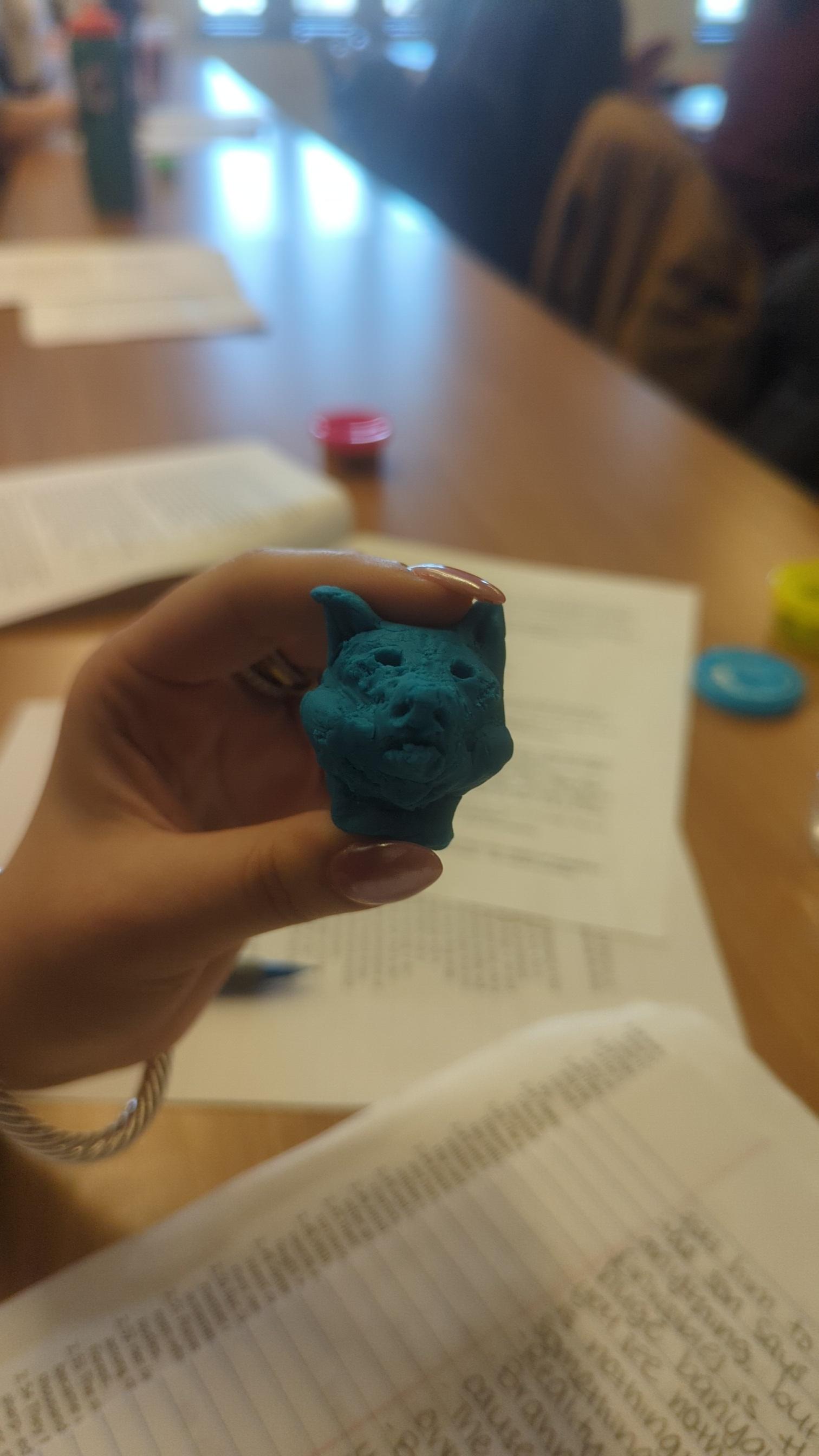
Student 10: So we made like the rivers flowing into the ocean. And then the ocean is like the being and the rivers are like the individual souls that like flow into the ocean and then like lose their individuality.
Brad: Excellent, great. So, just as the rivers flowing to the east and west merge into the ocean and become the ocean itself, forgetting that they were ever these separate rivers. In the same way, my dear boy, all these creatures when they come back from being, do not know that it is not they that have come back from being. Whatever they are in this world, whether tiger, lion, wolf, boar, worm, net fly, net or mosquito, they become again and again. That which is the finest essence, this whole world has that as its soul, that is the truth, that is the self. Tat Tvam Asi, you are that, Śvetaketu.
Brad: Section 11?
Student 11: Our group did.
Brad: Okay, go ahead.
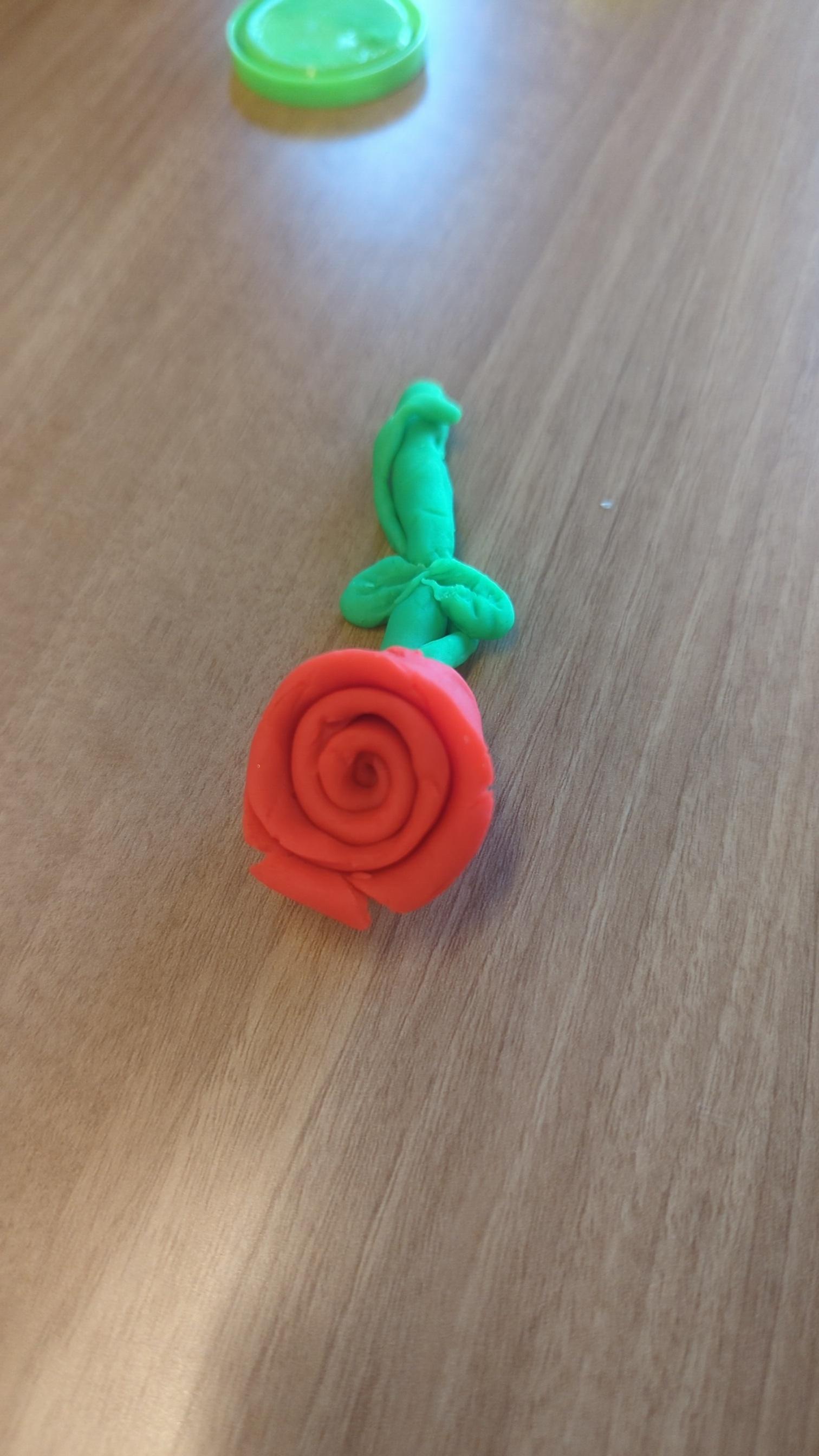
Student 11: So we made a tree and it was kind of talking about how like if you strike a branch or the root, like the life force leaves it and it withers away, but the tree itself still lives because the life force, the Jīva Ātman, is still there.
Brad: Excellent, great. So, if someone were to strike at the root of this great tree here, it would bleed, but live. If someone were to strike it in the middle, it would bleed, but live. If someone were to strike it at the top, it would bleed, but live. Pervaded by the living self, Ātman, Jīva, this tree stands firm, drinking in its moisture and rejoic. But if the life, Jīva, leaves one of its branches, that branch withers. If it leaves a second, that branch withers. If it leaves a third, that branch withers. If it leaves the whole tree, the whole tree withers. In exactly the same way, my dear boy, understand this. This body withers and dies when the living self has left it. The living self, however, does not die. That which is the finest essence, this whole world has that as its soul. That is the truth, that is the self. Tat Tvam Asi, you are that, Śvetaketu.
Brad: Section 12?
Student 12: Our group did.
Brad: Okay, go ahead.
Student 12: So we created the Banyan fruit and then we broke it down into the seed and then we broke down the seed to show that there's nothing visible inside, but that's where the essence comes from.
Brad: Excellent, great. Bring a fruit from that Banyan tree (Nyagrodha). Here it is, venerable sir. Break it. It is broken, venerable sir. What do you see there? These tiny seeds, venerable sir. Break one of them. It is broken, venerable sir. What do you see there? Nothing, venerable sir. My dear boy, the father said, that subtle essence which you do not perceive there, from that very essence, this great Banyan tree arises. Believe me, my dear boy, that which is the finest essence, this whole world has that as its soul. That is the truth, that is the self. Tat Tvam Asi, you are that, Śvetaketu.
Brad: 13?
Student 13: Our group did.
Brad: Okay, go ahead.
Student 13: We made salt dissolving in water. Mhm. And it's like you can't see it, but it's still there. Mhm.
Brad: Excellent, great. Place the salt in the water and wait on me tomorrow morning. The son did as he was commanded. The father said to him, "Bring me the salt which you placed in the water last night." The son looked for it and did not find it, for it was completely dissolved. Taste it from the surface of the water. How is it? Salty. Taste it from the middle. How is it? Salty. Taste it from the bottom. How is it? Salty. Throw it away and come back to me. He did so, but the salt was always there. Then the father said, "Here also in this body, forsooth, you do not perceive the truth, Sat, my son, but there indeed it is. That which is the finest essence, this whole world has that as its soul. That is the truth, that is the self. Tat Tvam Asi, you are that, Śvetaketu."
Brad: 14?
Student 14: Our group did.
Brad: Okay, go ahead.
Student 14: So we made a blindfolded person and then another person leading them. Mhm. And it's kind of like the analogy of like, if you're trying to find your way back home, like you need a teacher to guide you. Mhm.
Brad: Excellent, great. Just as someone, my dear boy, might lead a person away from the land of the Gāndhāras with his eyes covered and leave him in a place where there are no human beings. And just as that person would turn towards the east or the north or the west or the south, shouting, "I've been led here with my eyes covered. I've been left here with my eyes covered." And just as someone might take off the bandage and tell him, "In that direction are the Gāndhāras, go in that direction." Thereupon, being informed and capable of judgment, he would by asking his way from village to village, draw nearer and nearer to the land of the Gāndhāras. In exactly the same way does a man who has found a teacher to instruct him obtain the true knowledge. That which is the finest essence, this whole world has that as its soul. That is the truth, that is the self. Tat Tvam Asi, you are that, Śvetaketu.
Brad: 15?
Student 15: Our group did.
Brad: Okay, go ahead.
Student 15: So we made like a person laying down like they're dying and then like their family around them. Mhm. And it's talking about how like when you're dying, like your speech merges into the mind and then the mind merges into the breath and then the breath merges into the heat and then the heat merges into like the highest divinity. Mhm.
Brad: Excellent, great. Around a person lying near death, my dear boy, his relatives gather and ask, "Do you know me? Do you know me?" As long as his speech has not merged in his mind, his mind in his breath (Prāṇa), his breath in heat (Tejas), and the heat in the highest divinity (Sat), so long does he know them. But when his speech has merged in his mind, his mind in his breath, his breath in heat, and the heat in the highest divinity, then he does not know them. That which is the finest essence, this whole world has that as its soul. That is the truth, that is the self. Tat Tvam Asi, you are that, Śvetaketu.
Brad: 16?
Student 16: Our group did.
Brad: Okay, go ahead.
Student 16: So we made like the scales and then the axe and then the person. Mhm. And it talks about how like, if you're telling the truth, the truth will protect you from like the hot axe, but if you're lying, like you'll get burned. Mhm.
Brad: Excellent, great. My dear boy, they bring a man whom they have seized by the hand and say, "He has taken something, he has committed theft, heat the axe for him." If he has committed the theft, then he makes himself a liar. Being given to falsehood, he covers himself with falsehood and seizing the heated axe, he is burnt, and then he is killed. But if he has not committed the theft, then he makes himself true. Being given to truth (Satya), he covers himself with truth, and seizing the heated axe, he is not burnt, and then he is released. As that truthful man is not burnt, thus has all that exists that truth (Sat) as its self. That is the truth, that is the self. Tat Tvam Asi, you are that, Śvetaketu.
Brad: And then he understood. Good. Excellent.